

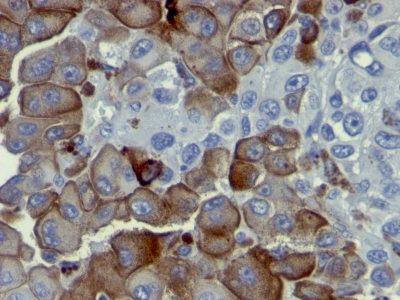
NGFR (Nerve Growth Factor Receptor)(NGFR5), 1mg/mL [26628-22-8]
BNUM0890

ApplicationsImmunoHistoChemistry, ImmunoHistoChemistry Paraffin
Product group Antibodies
ReactivityFeline, Ferret, Human, Monkey, Mouse, Primate, Rabbit
TargetNGFR
Overview
- SupplierBiotium
- Product NameNGFR (Nerve Growth Factor Receptor)(NGFR5), 1mg/mL [26628-22-8]
- Delivery Days Customer9
- ApplicationsImmunoHistoChemistry, ImmunoHistoChemistry Paraffin
- CAS Number26628-22-8
- CertificationResearch Use Only
- ClonalityMonoclonal
- Clone IDNGFR5
- Concentration1 mg/ml
- Gene ID4804
- Target nameNGFR
- Target descriptionnerve growth factor receptor
- Target synonymsCD271, Gp80-LNGFR, TNFRSF16, p75(NTR), p75NTR, tumor necrosis factor receptor superfamily member 16, NGF receptor, TNFR superfamily, member 16, low affinity neurotrophin receptor p75NTR, low-affinity nerve growth factor receptor, low-affinity nerve growth factor receptor p75NGFR, low-affinity nerve growth factor receptor p75NGR, p75 ICD
- HostMouse
- IsotypeIgG1
- Protein IDP08138
- Protein NameTumor necrosis factor receptor superfamily member 16
- Scientific DescriptionThis antibody recognizes a glycoprotein of 75 kDa, identified as low affinity Nerve Growth Factor (NGF) Receptor (p75NGFR) or Neurotrophin Receptor (p75NTR). Its epitope spans in aa 1-160 of extracellular domain of NGFR/NTR. NGF-receptor contains an extracellular domain containing four 40-amino acid repeats with 6 cysteine residues at conserved positions followed by a serine/threonine-rich region, a single transmembrane domain, and a 155-amino acid cytoplasmic domain. The cysteine-rich region contains the nerve growth factor binding domain. NGF is important for the development, differentiation, and survival of variety of neuronal and non-neuronal cells. Its action is mediated by binding two distinct receptors, the high affinity p140 and low affinity p75. Primary antibodies are available purified, or with a selection of fluorescent CF® Dyes and other labels. CF® Dyes offer exceptional brightness and photostability. Note: Conjugates of blue fluorescent dyes like CF®405S and CF®405M are not recommended for detecting low abundance targets, because blue dyes have lower fluorescence and can give higher non-specific background than other dye colors.
- SourceAnimal
- ReactivityFeline, Ferret, Human, Monkey, Mouse, Primate, Rabbit
- Storage Instruction-20°C
- UNSPSC41116161
MSDS
Related products

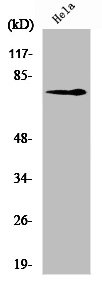
Product group Antibodies

NGFR AntibodyCSB-PA003447
ApplicationsWestern Blot, ELISA
ReactivityHuman, Mouse, Rat
TargetNGFR
- SizePrice
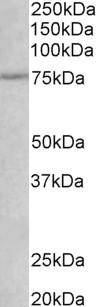
Product group Antibodies

ApplicationsWestern Blot, ELISA
ReactivityHuman, Rat
- SizePrice

Product group Antibodies

Anti-p75 NGF Receptor/NGFR Antibody Picoband(r)A01187-CARRIER-FREE
ApplicationsFlow Cytometry, ImmunoFluorescence, Western Blot, ELISA, ImmunoCytoChemistry
ReactivityHuman, Rat
TargetNGFR
- SizePrice
Product group Antibodies

NGFR / CD271 / TNR16 AntibodyLS-C746900
ApplicationsWestern Blot
ReactivityHuman, Mouse, Rat
TargetNGFR
- SizePrice
Product group Antibodies

Goat anti-NGFREB06775
ApplicationsWestern Blot, ELISA
ReactivityBovine, Canine, Human, Mouse, Rat
TargetNGFR
- SizePrice

Product group Antibodies

Anti-NGFR AntibodyHPA004765
ApplicationsWestern Blot, ImmunoCytoChemistry, ImmunoHistoChemistry
ReactivityHuman
TargetNGFR
- SizePrice
Product group Antibodies

NGFR Polyclonal AntibodyCAC14773
ApplicationsWestern Blot, ELISA, ImmunoHistoChemistry
ReactivityMouse
TargetNGFR
- SizePrice
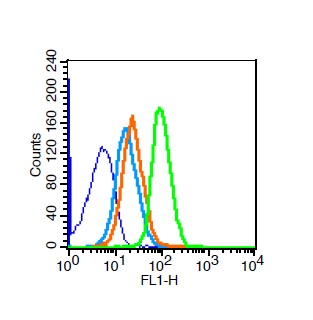
Product group Antibodies

NGFR/p75NTR Polyclonal AntibodyBS-7122R
ApplicationsFlow Cytometry, ImmunoFluorescence, Western Blot, ELISA, ImmunoCytoChemistry, ImmunoHistoChemistry, ImmunoHistoChemistry Frozen, ImmunoHistoChemistry Paraffin
ReactivityCanine, Human, Mouse, Rat
TargetNGFR
- SizePrice
![p75 NGF Receptor / CD271 antibody detects p75 NGF Receptor / CD271 protein by immunofluorescent analysis. Sample: DIV10 rat E18 primary cortical neuron cells were fixed in 4% paraformaldehyde at RT for 15 min. Green: p75 NGF Receptor / CD271 stained by p75 NGF Receptor / CD271 antibody (GTX102262) diluted at 1:500. Red: Tau, stained by Tau antibody [GT287] (GTX634809) diluted at 1:500. Blue: Fluoroshield with DAPI (GTX30920).](https://www.genetex.com/upload/website/prouct_img/normal/GTX102262/GTX102262_43811_20200820_ICC_IF_R_w_23060100_660.webp)
Product group Antibodies

p75 NGF Receptor / CD271 antibodyGTX102262
ApplicationsFlow Cytometry, ImmunoFluorescence, Western Blot, ImmunoCytoChemistry, ImmunoHistoChemistry, ImmunoHistoChemistry Frozen, ImmunoHistoChemistry Paraffin
ReactivityHuman, Mouse, Rat
TargetNGFR
- SizePrice