

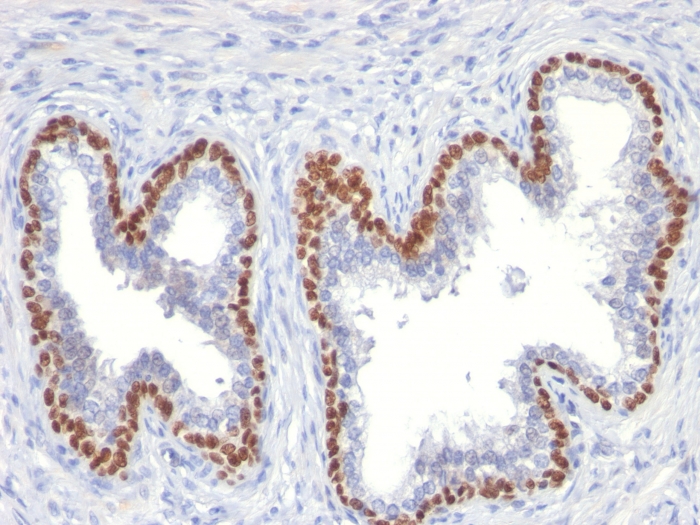
p63 (Squamous, Basal & Myoepithelial Cell Marker)(TP63/11), CF405S conjugate, 0.1mg/mL [26628-22-8]
BNC040011

ApplicationsImmunoHistoChemistry, ImmunoHistoChemistry Paraffin
Product group Antibodies
ReactivityBovine, Human, Mouse
TargetTP63
Overview
- SupplierBiotium
- Product Namep63 (Squamous, Basal & Myoepithelial Cell Marker)(TP63/11), CF405S conjugate, 0.1mg/mL [26628-22-8]
- Delivery Days Customer9
- ApplicationsImmunoHistoChemistry, ImmunoHistoChemistry Paraffin
- CAS Number26628-22-8
- CertificationResearch Use Only
- ClonalityMonoclonal
- Clone IDTP63/11
- Concentration0.1 mg/ml
- ConjugateOther Conjugate
- Gene ID8626
- Target nameTP63
- Target descriptiontumor protein p63
- Target synonymsAIS, B(p51A), B(p51B), EEC3, KET, LMS, NBP, OFC8, RHS, SHFM4, TP53CP, TP53L, TP73L, p40, p51, p53CP, p63, p73H, p73L, tumor protein 63, amplified in squamous cell carcinoma, chronic ulcerative stomatitis protein, keratinocyte transcription factor KET, transformation-related protein 63, tumor protein p53-competing protein
- HostMouse
- IsotypeIgG2a
- Protein IDQ9H3D4
- Protein NameTumor protein 63
- Scientific Descriptionp63 is a homolog of the tumor suppressor p53. It is identified in basal cells in the epithelial layers of a variety of tissues, including epidermis, cervix, urothelium, breast and prostate. p63 was detected in nuclei of the basal epithelium in normal prostate glands; however, it is not expressed in malignant tumors of the prostate. As a result, p63 has been reported as a useful marker for differentiating benign from malignant lesions in the prostate, particularly when used in combination with markers of high molecular weight cytokeratins and the prostate-specific marker AMACR (P504S). p63 has also been shown to be a sensitive marker for lung squamous cell carcinomas (SqCC), with a sensitivity of ~90%. Specificity for lung SqCC, vs. lung adenocarcinoma (LADC), is approximately 80%. In breast tissue, p63 has been identified in myoepithelial cells of normal ducts. Primary antibodies are available purified, or with a selection of fluorescent CF® Dyes and other labels. CF® Dyes offer exceptional brightness and photostability. Note: Conjugates of blue fluorescent dyes like CF®405S and CF®405M are not recommended for detecting low abundance targets, because blue dyes have lower fluorescence and can give higher non-specific background than other dye colors.
- SourceAnimal
- ReactivityBovine, Human, Mouse
- Storage Instruction2°C to 8°C,RT
- UNSPSC41116161
MSDS
Related products

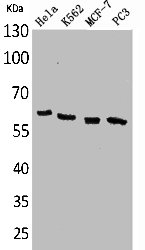
Product group Antibodies

TP63 AntibodyCSB-PA005081
ApplicationsWestern Blot, ELISA
ReactivityHuman, Mouse, Rat
TargetTP63
- SizePrice
Product group Antibodies

Anti-TP63 Antibody144-12937
ApplicationsImmunoFluorescence, Western Blot
ReactivityHuman, Mouse, Rat
TargetTP63
- SizePrice
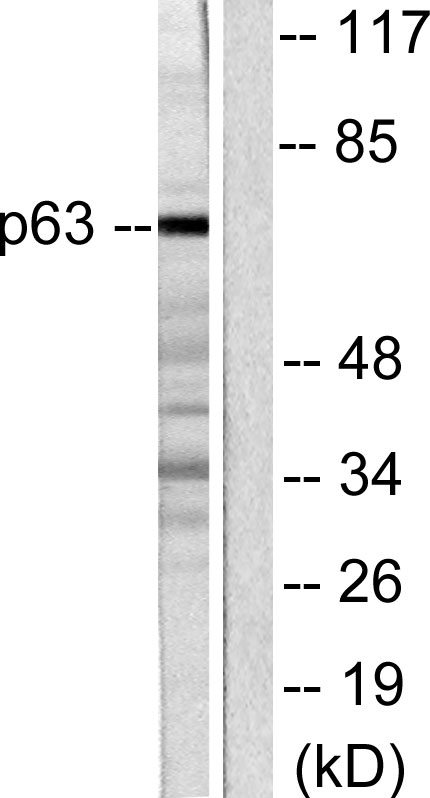
Product group Antibodies

Anti-p63 AntibodyA96644
ApplicationsImmunoFluorescence, Western Blot, ELISA
ReactivityHuman, Mouse, Rat
- SizePrice


Product group Antibodies

Anti-TP63 AntibodyAMAB91224
ApplicationsWestern Blot, ImmunoHistoChemistry
ReactivityHuman
TargetTP63
- SizePrice
Product group Antibodies

Anti-p63 [BU5]Ab00871-10.0
ApplicationsFlow Cytometry, ImmunoFluorescence
ReactivityHuman
TargetTP63
- SizePrice
Product group Antibodies

TP63 / p63 AntibodyLS-C830518
ApplicationsELISA, ImmunoHistoChemistry
ReactivityHuman, Mouse, Rat
TargetTP63
- SizePrice

Product group Antibodies

ApplicationsWestern Blot, ELISA
ReactivityBovine, Canine, Human, Mouse, Porcine, Rat
TargetTP63
- SizePrice