

PARP antibody [A6.4.12]
GTX75098

ApplicationsImmunoFluorescence, ImmunoPrecipitation, Western Blot, ELISA, ImmunoCytoChemistry, ImmunoHistoChemistry, ImmunoHistoChemistry Frozen, ImmunoHistoChemistry Paraffin
Product group Antibodies
ReactivityDrosophila, Hamster, Human, Mouse, Rat, Xenopus
TargetPARP1
Overview
- SupplierGeneTex
- Product NamePARP antibody [A6.4.12]
- Delivery Days Customer9
- Application Supplier NoteWB: 1/1,000-1/5,000. *Optimal dilutions/concentrations should be determined by the researcher.Not tested in other applications.
- ApplicationsImmunoFluorescence, ImmunoPrecipitation, Western Blot, ELISA, ImmunoCytoChemistry, ImmunoHistoChemistry, ImmunoHistoChemistry Frozen, ImmunoHistoChemistry Paraffin
- CertificationResearch Use Only
- ClonalityMonoclonal
- Clone IDA6.4.12
- Concentration1 mg/ml
- ConjugateUnconjugated
- Gene ID142
- Target namePARP1
- Target descriptionpoly(ADP-ribose) polymerase 1
- Target synonymsADPRT, ADPRT 1, ADPRT1, ARTD1, PARP, PARP-1, PARS, PPOL, Poly-PARP, pADPRT-1, poly [ADP-ribose] polymerase 1, ADP-ribosyltransferase (NAD+; poly (ADP-ribose) polymerase), ADP-ribosyltransferase NAD(+), ADP-ribosyltransferase diphtheria toxin-like 1, DNA ADP-ribosyltransferase PARP1, NAD(+) ADP-ribosyltransferase 1, poly (ADP-ribose) polymerase family, member 1, poly(ADP-ribose) synthetase, poly(ADP-ribosyl)transferase, poly[ADP-ribose] synthase 1, protein poly-ADP-ribosyltransferase PARP1
- HostMouse
- IsotypeIgG1
- Protein IDP09874
- Protein NamePoly [ADP-ribose] polymerase 1
- Scientific DescriptionThis gene encodes a chromatin-associated enzyme, poly(ADP-ribosyl)transferase, which modifies various nuclear proteins by poly(ADP-ribosyl)ation. The modification is dependent on DNA and is involved in the regulation of various important cellular processes such as differentiation, proliferation, and tumor transformation and also in the regulation of the molecular events involved in the recovery of cell from DNA damage. In addition, this enzyme may be the site of mutation in Fanconi anemia, and may participate in the pathophysiology of type I diabetes. [provided by RefSeq, Jul 2008]
- ReactivityDrosophila, Hamster, Human, Mouse, Rat, Xenopus
- Storage Instruction-20°C or -80°C,2°C to 8°C
- UNSPSC12352203
References
- Zhou Y, Caron P, Legube G, et al. Quantitation of DNA double-strand break resection intermediates in human cells. Nucleic Acids Res. 2014,42(3):e19. doi: 10.1093/nar/gkt1309Read this paper
- Zhou Y, Paull TT. DNA-dependent protein kinase regulates DNA end resection in concert with Mre11-Rad50-Nbs1 (MRN) and ataxia telangiectasia-mutated (ATM). J Biol Chem. 2013,288(52):37112-25. doi: 10.1074/jbc.M113.514398Read this paper
- Sinanoglu O, Yener AN, Ekici S, et al. The protective effects of spirulina in cyclophosphamide induced nephrotoxicity and urotoxicity in rats. Urology. 2012,80(6):1392.e1-6. doi: 10.1016/j.urology.2012.06.053Read this paper
- Tseng HL, Li CJ, Huang LH, et al. Quercetin 3-O-methyl ether protects FL83B cells from copper induced oxidative stress through the PI3K/Akt and MAPK/Erk pathway. Toxicol Appl Pharmacol. 2012,264(1):104-13. doi: 10.1016/j.taap.2012.07.022Read this paper
Datasheet
Related products
Product group Antibodies

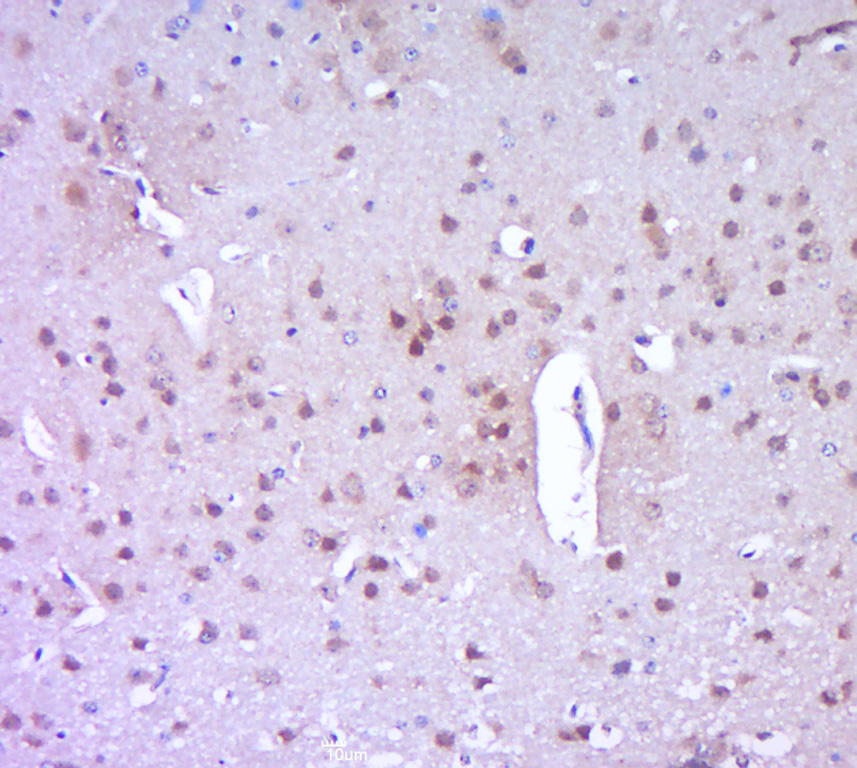
PARP1 Polyclonal AntibodyCAC15893
ApplicationsImmunoFluorescence, Western Blot, ELISA, ImmunoHistoChemistry
TargetPARP1
- SizePrice
Product group Antibodies
References

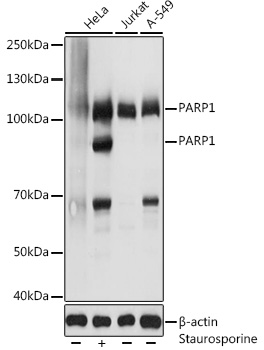
PARP1 Polyclonal AntibodyBS-2138R
ApplicationsFlow Cytometry, ImmunoFluorescence, Western Blot, ELISA, ImmunoCytoChemistry, ImmunoHistoChemistry, ImmunoHistoChemistry Frozen, ImmunoHistoChemistry Paraffin
ReactivityHuman
TargetPARP1
- SizePrice

Product group Antibodies

Anti-PARP1 AntibodyA11205
ApplicationsImmunoFluorescence, Western Blot, ImmunoCytoChemistry
ReactivityHuman, Mouse, Rat
- SizePrice

Product group Antibodies

Anti-PARP1 AntibodyAMAB90959
ApplicationsWestern Blot, ImmunoCytoChemistry, ImmunoHistoChemistry
ReactivityHuman
TargetPARP1
- SizePrice
Product group Antibodies

Anti-PARP1 Antibody144-00942
ApplicationsImmunoFluorescence, Western Blot, ImmunoHistoChemistry
ReactivityHuman, Mouse, Rat
TargetPARP1
- SizePrice
Product group Antibodies

anti-PARP-1 [ARTD1] (human), pAbAG-25T-0002
ApplicationsImmunoPrecipitation, Western Blot, ImmunoCytoChemistry, ImmunoHistoChemistry
ReactivityHuman, Monkey, Mouse
TargetPARP1
- SizePrice
![WB analysis of wild-type (WT) and PARP (cleaved) knockout (KO) HeLa cell extracts using GTX00943 PARP (cleaved) antibody [GT1181]. Dilution : 1:1000 Laoding : 25microg](https://www.genetex.com/upload/website/prouct_img/normal/GTX00943/GTX00943_20200327_WB_1_w_23053121_685.webp)
Product group Antibodies
References
PARP (cleaved) antibody [GT1181]GTX00943
ApplicationsWestern Blot, ImmunoHistoChemistry, ImmunoHistoChemistry Paraffin
ReactivityHuman, Mouse, Porcine
TargetPARP1
- SizePrice
![FACS analysis of Jurkat cells using GTX83005 PARP antibody [7A10]. Green : PARP Purple : negative control](https://www.genetex.com/upload/website/prouct_img/normal/GTX83005/GTX83005_20170912_FACS_w_23061322_421.webp)
Product group Antibodies
PARP antibody [7A10]GTX83005
ApplicationsFlow Cytometry, Western Blot, ELISA
ReactivityHuman
TargetPARP1
- SizePrice
Product group Antibodies
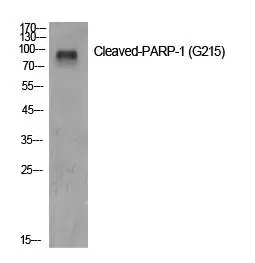
PARP (cleaved Gly215) antibodyGTX86935
ApplicationsWestern Blot
ReactivityHuman, Mouse
TargetPARP1
- SizePrice