

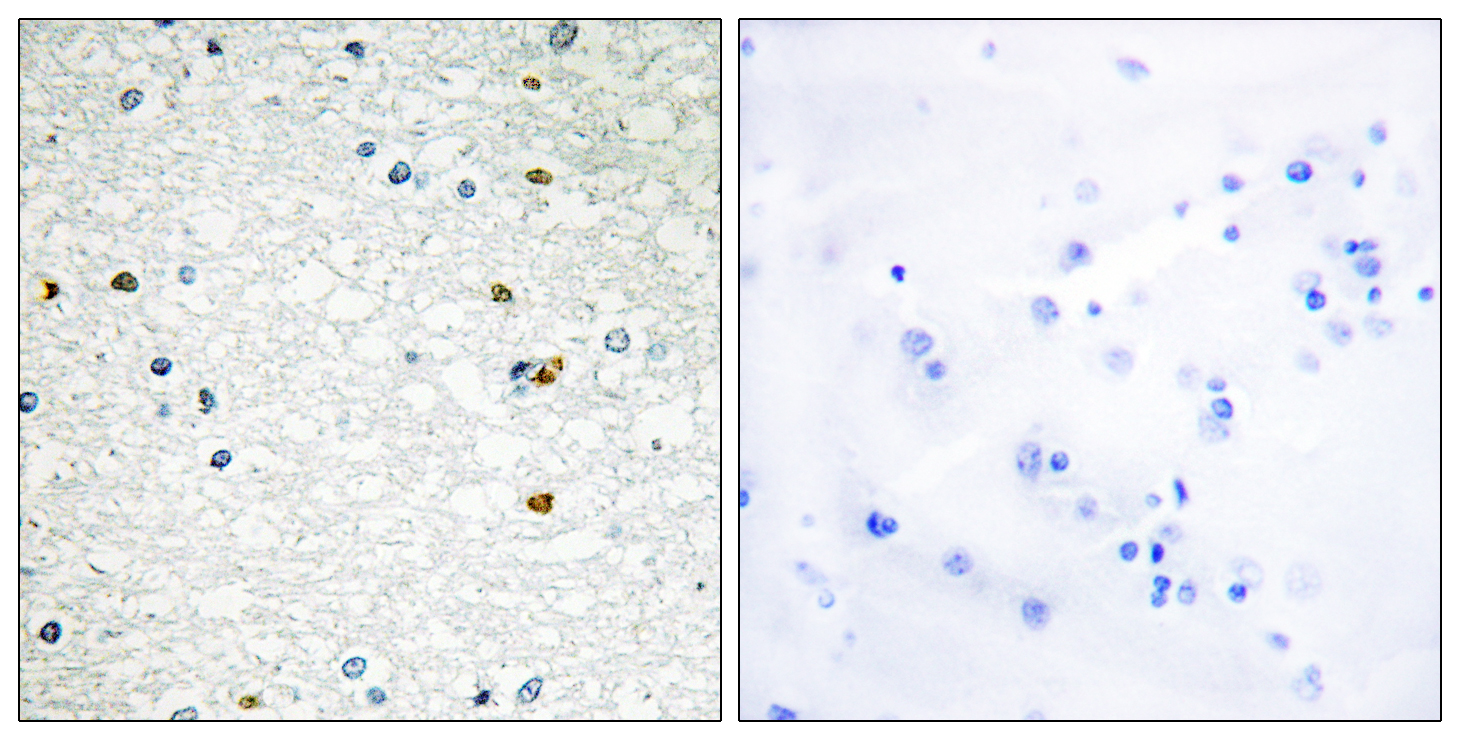
PARP3 Polyclonal Antibody
RD76038A

ApplicationsELISA, ImmunoHistoChemistry
Product group Antibodies
ReactivityHuman
TargetPARP3
Overview
- SupplierReddot Biotech
- Product NamePARP3 Polyclonal Antibody
- Delivery Days Customer5
- ApplicationsELISA, ImmunoHistoChemistry
- CertificationResearch Use Only
- ClonalityPolyclonal
- Concentration0.5 mg/ml
- ConjugateUnconjugated
- Gene ID10039
- Target namePARP3
- Target descriptionpoly(ADP-ribose) polymerase family member 3
- Target synonymsADPRT3, ADPRTL2, ADPRTL3, ARTD3, IRT1, PADPRT-3, protein mono-ADP-ribosyltransferase PARP3, ADP-ribosyltransferase (NAD+; poly (ADP-ribose) polymerase)-like 2, ADP-ribosyltransferase (NAD+; poly (ADP-ribose) polymerase)-like 3, ADP-ribosyltransferase diphtheria toxin-like 3, ADPRT-3, DNA ADP-ribosyltransferase PARP3, NAD(+) ADP-ribosyltransferase 3, NAD+ ADP-ribosyltransferase 3, poly [ADP-ribose] polymerase 3, poly(ADP-ribose) synthetase-3, poly[ADP-ribose] synthase 3, poly[ADP-ribose] synthetase 3
- HostRabbit
- IsotypeIgG
- Protein IDQ9Y6F1
- Protein NameProtein mono-ADP-ribosyltransferase PARP3
- Scientific DescriptionThe protein encoded by this gene belongs to the PARP family. These enzymes modify nuclear proteins by poly-ADP-ribosylation, which is required for DNA repair, regulation of apoptosis, and maintenance of genomic stability. This gene encodes the poly(ADP-ribosyl)transferase 3, which is preferentially localized to the daughter centriole throughout the cell cycle. Alternatively spliced transcript variants encoding different isoforms have been identified. - This is a PARP3 Polyclonal Antibody from Reddot Biotech. This product is for Research Use Only.
- ReactivityHuman
- Storage Instruction-20°C
- UNSPSC41116161
Related products
Product group Antibodies

Anti-PARP3 AntibodyA100654
ApplicationsELISA, ImmunoHistoChemistry
ReactivityHuman
- SizePrice

Product group Antibodies

Anti-PARP3 Antibody Picoband(r)A03762-2-CARRIER-FREE
ApplicationsImmunoFluorescence, Western Blot, ELISA, ImmunoCytoChemistry, ImmunoHistoChemistry
ReactivityHuman, Monkey, Mouse, Rat
TargetPARP3
- SizePrice
Product group Antibodies

Anti-PARP3 Antibody144-66354
ApplicationsImmunoFluorescence, Western Blot
ReactivityHuman
TargetPARP3
- SizePrice
Product group Antibodies

PARP3 Polyclonal AntibodyBS-7108R
ApplicationsImmunoFluorescence, Western Blot, ELISA, ImmunoCytoChemistry, ImmunoHistoChemistry, ImmunoHistoChemistry Frozen, ImmunoHistoChemistry Paraffin
ReactivityEquine, Human, Mouse, Rabbit, Rat
TargetPARP3
- SizePrice
Product group Antibodies

PARP3 AntibodyCSB-PA006370
ApplicationsELISA, ImmunoHistoChemistry
ReactivityHuman
TargetPARP3
- SizePrice
Product group Antibodies

Goat anti-PARP3EB09029
ApplicationsELISA, ImmunoHistoChemistry
ReactivityHuman
TargetPARP3
- SizePrice
Product group Antibodies

PARP3 Polyclonal AntibodyCAC15522
ApplicationsWestern Blot, ELISA, ImmunoHistoChemistry
TargetPARP3
- SizePrice
Product group Antibodies

PARP3 AntibodyLS-C401920
ApplicationsELISA, ImmunoHistoChemistry
ReactivityHuman
TargetPARP3
- SizePrice

Product group Antibodies

Anti-PARP3 AntibodyHPA067657
ApplicationsWestern Blot, ImmunoHistoChemistry
ReactivityHuman
TargetPARP3
- SizePrice
![Various whole cell extracts (30 μg) were separated by 7.5% SDS-PAGE, and the membrane was blotted with PARP3 antibody [HL1509] (GTX636983) diluted at 1:1000. The HRP-conjugated anti-rabbit IgG antibody (GTX213110-01) was used to detect the primary antibody. Corresponding RNA expression data for the same cell lines are based on Human Protein Atlas program.](https://www.genetex.com/upload/website/prouct_img/normal/GTX636983/GTX636983_T-44676_20220722_WB_TPM_watermark_22072519_520.webp)
Product group Antibodies

PARP3 antibody [HL1509]GTX636983
ApplicationsWestern Blot, ImmunoHistoChemistry, ImmunoHistoChemistry Paraffin
ReactivityHuman, Mouse
TargetPARP3
- SizePrice