

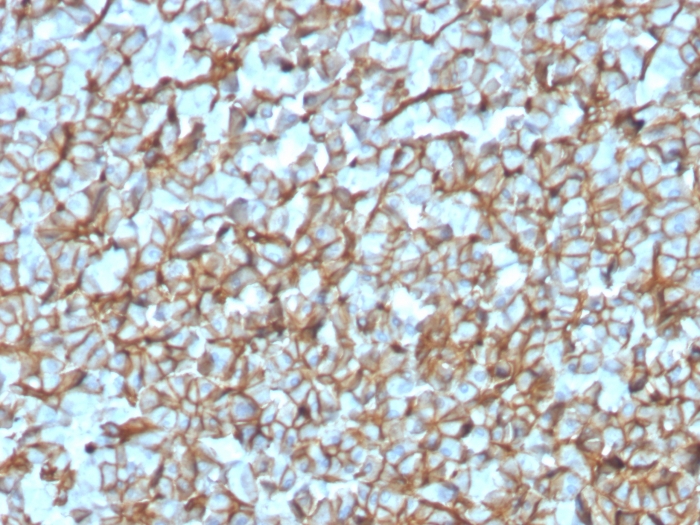
Spectrin beta III (SPTBN2)(SPTBN2/3142R), 0.2mg/mL [26628-22-8]
BNUB3142

ApplicationsFlow Cytometry, ImmunoFluorescence, Western Blot, ImmunoHistoChemistry, ImmunoHistoChemistry Paraffin
Product group Antibodies
ReactivityHuman
TargetSPTBN2
Overview
- SupplierBiotium
- Product NameSpectrin beta III (SPTBN2)(SPTBN2/3142R), 0.2mg/mL [26628-22-8]
- Delivery Days Customer9
- ApplicationsFlow Cytometry, ImmunoFluorescence, Western Blot, ImmunoHistoChemistry, ImmunoHistoChemistry Paraffin
- CAS Number26628-22-8
- CertificationResearch Use Only
- ClonalityMonoclonal
- Clone IDSPTBN2/3142R
- Concentration0.2 mg/ml
- Gene ID6712
- Target nameSPTBN2
- Target descriptionspectrin beta, non-erythrocytic 2
- Target synonymsGTRAP41, SCA5, SCAR14, spectrin beta chain, non-erythrocytic 2, beta-III spectrin, glutamate transporter EAAT4-associated protein 41, spectrin beta III sigma 2, spectrin beta chain, brain 2, spectrin, non-erythroid beta chain 2, spinocerebellar ataxia 5 protein
- HostRabbit
- IsotypeIgG
- Protein IDO15020
- Protein NameSpectrin beta chain, non-erythrocytic 2
- Scientific DescriptionSpectrin is an actin binding protein that is a major component of the plasma membrane skeleton. Spectrins function as membrane organizers and stabilizers by forming dimers, tetramers and higher polymers. Vertebrate spectrins have two alpha-subunits (alpha-I/alpha-II) four beta-subunits (beta-I-beta-IV) and a beta-H subunit creating diversity and specialization of function. Spectrin III is highly expressed in brain, kidney, pancreas and liver, and at lower levels in lung and placenta. Spectrin beta 3 is primarily expressed in nervous tissues with highest expression levels in the cerebellum, where it is found in Purkinje cell soma and dendrites. Primary antibodies are available purified, or with a selection of fluorescent CF® Dyes and other labels. CF® Dyes offer exceptional brightness and photostability. Note: Conjugates of blue fluorescent dyes like CF®405S and CF®405M are not recommended for detecting low abundance targets, because blue dyes have lower fluorescence and can give higher non-specific background than other dye colors.
- SourceAnimal
- ReactivityHuman
- Storage Instruction2°C to 8°C,RT
- UNSPSC41116161
MSDS
Related products
Product group Antibodies

SPTBN2 AntibodyCSB-PA022636GA01HU
ApplicationsWestern Blot, ELISA
ReactivityHuman
TargetSPTBN2
- SizePrice

Product group Antibodies

Anti-SPTBN2 Antibody Picoband(r)A05492-CARRIER-FREE
ApplicationsFlow Cytometry, Western Blot, ELISA, ImmunoHistoChemistry
ReactivityHuman, Mouse, Rat
TargetSPTBN2
- SizePrice
Product group Antibodies

ReactivityHuman
TargetSPTBN2
- SizePrice
Product group Antibodies

SPTBN2 AntibodyLS-C783405
ApplicationsFlow Cytometry, Western Blot
ReactivityHuman
TargetSPTBN2
- SizePrice
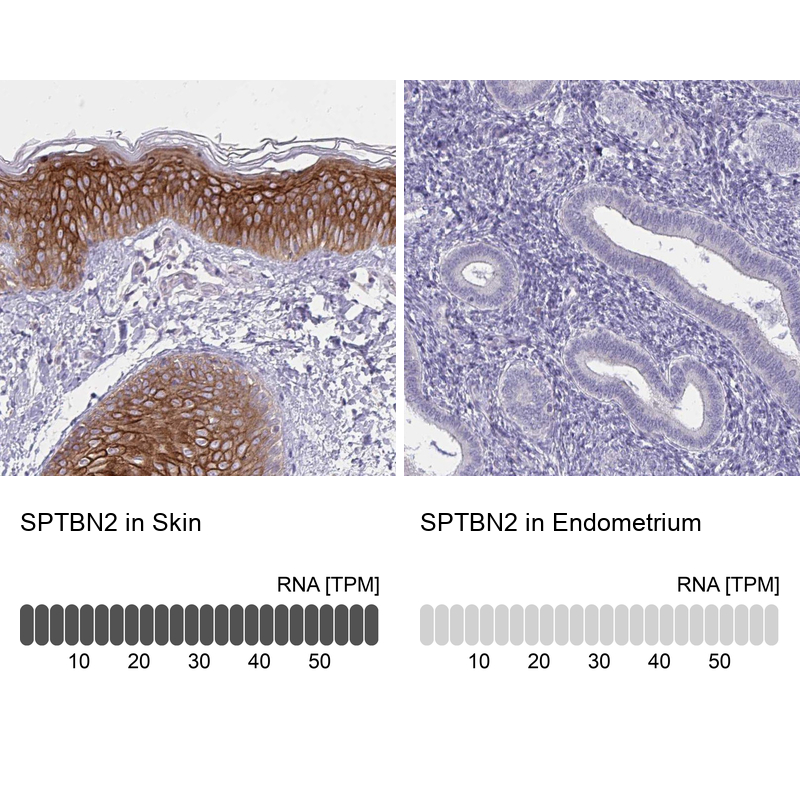
Product group Antibodies

Anti-SPTBN2 AntibodyHPA039293
ApplicationsImmunoCytoChemistry, ImmunoHistoChemistry
ReactivityHuman
TargetSPTBN2
- SizePrice
Product group Antibodies

SPTBN2 Polyclonal AntibodyBS-10784R
ApplicationsImmunoFluorescence, ImmunoCytoChemistry, ImmunoHistoChemistry, ImmunoHistoChemistry Frozen, ImmunoHistoChemistry Paraffin
TargetSPTBN2
- SizePrice
![WB analysis of PANC-1 whole cell lysate using GTX02716 SPTBN2 antibody [SPTBN2/2894R].](https://www.genetex.com/upload/website/prouct_img/normal/GTX02716/GTX02716_20210319_WB_1_w_23053122_554.webp)
Product group Antibodies

SPTBN2 antibody [SPTBN2/2894R]GTX02716
ApplicationsFlow Cytometry, Western Blot, ELISA, ImmunoHistoChemistry, ImmunoHistoChemistry Paraffin
ReactivityHuman
TargetSPTBN2
- SizePrice