

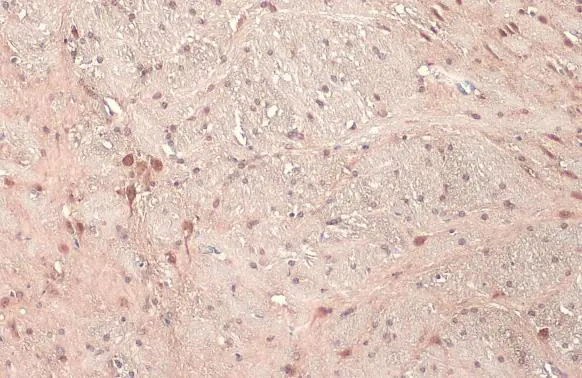
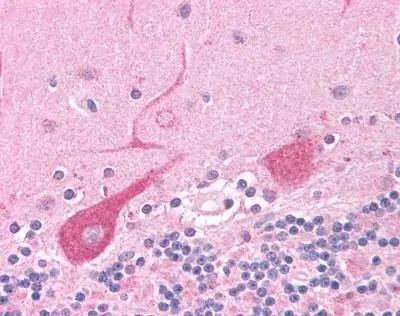
UBE3A antibody detects UBE3A protein at cytoplasm and nucleus by immunohistochemical analysis. Sample: Paraffin-embedded mouse brain. UBE3A stained by UBE3A antibody (GTX101092) diluted at 1:500. Antigen Retrieval: Citrate buffer, pH 6.0, 15 min
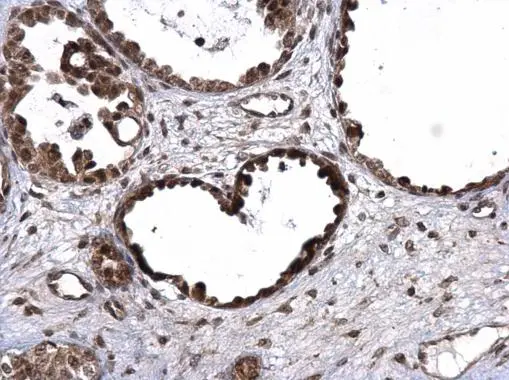
![UBE3A antibody detects UBE3A protein at nucleus by immunofluorescent analysis. Sample: DIV10 rat E18 primary cortical neuron cells were fixed in 4% paraformaldehyde at RT for 15 min. Green: UBE3A stained by UBE3A antibody (GTX101092) diluted at 1:500. Red: Tau, an axon marker, stained by Tau antibody [GT287] (GTX634809) diluted at 1:500. Blue: Fluoroshield with DAPI (GTX30920).](https://www.genetex.com/upload/website/prouct_img/normal/GTX101092/GTX101092_44553_20220128_ICC_IF_w_23060100_672.webp "UBE3A antibody detects UBE3A protein at nucleus by immunofluorescent analysis. Sample: DIV10 rat E18 primary cortical neuron cells were fixed in 4% paraformaldehyde at RT for 15 min. Green: UBE3A stained by UBE3A antibody (GTX101092) diluted at 1:500. Red: Tau, an axon marker, stained by Tau antibody [GT287] (GTX634809) diluted at 1:500. Blue: Fluoroshield with DAPI (GTX30920).")
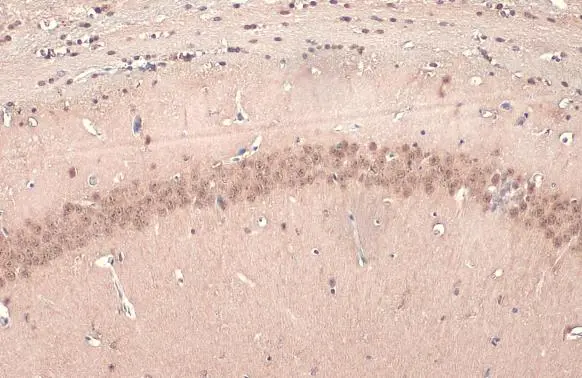
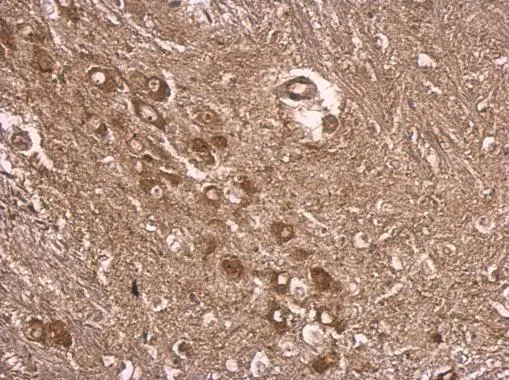
UBE3A antibody detects UBE3A protein at cytoplasm and nucleus by immunohistochemical analysis. Sample: Paraffin-embedded mouse brain. UBE3A stained by UBE3A antibody (GTX101092) diluted at 1:500. Antigen Retrieval: Citrate buffer, pH 6.0, 15 min
UBE3A antibody
GTX101092

ApplicationsImmunoFluorescence, ImmunoCytoChemistry, ImmunoHistoChemistry, ImmunoHistoChemistry Paraffin
Product group Antibodies
ReactivityHuman, Mouse, Rat
TargetUBE3A
Overview
- SupplierGeneTex
- Product NameUBE3A antibody
- Delivery Days Customer9
- Application Supplier NoteICC/IF: 1:100-1:1000. IHC-P: 1:100-1:1000. *Optimal dilutions/concentrations should be determined by the researcher.Not tested in other applications.
- ApplicationsImmunoFluorescence, ImmunoCytoChemistry, ImmunoHistoChemistry, ImmunoHistoChemistry Paraffin
- CertificationResearch Use Only
- ClonalityPolyclonal
- Concentration1.26 mg/ml
- ConjugateUnconjugated
- Gene ID7337
- Target nameUBE3A
- Target descriptionubiquitin protein ligase E3A
- Target synonymsANCR, AS, E6-AP, EPVE6AP, HPVE6A, PIX1, ubiquitin-protein ligase E3A, CTCL tumor antigen se37-2, E6AP ubiquitin-protein ligase, HECT-type ubiquitin transferase E3A, human papilloma virus E6-associated protein, human papillomavirus E6-associated protein, oncogenic protein-associated protein E6-AP, renal carcinoma antigen NY-REN-54
- HostRabbit
- IsotypeIgG
- Protein IDQ05086
- Protein NameUbiquitin-protein ligase E3A
- Scientific DescriptionThis gene encodes an E3 ubiquitin-protein ligase, part of the ubiquitin protein degradation system. This imprinted gene is maternally expressed in brain and biallelically expressed in other tissues. Maternally inherited deletion of this gene causes Angelman Syndrome, characterized by severe motor and intellectual retardation, ataxia, hypotonia, epilepsy, absence of speech, and characteristic facies. The protein also interacts with the E6 protein of human papillomavirus types 16 and 18, resulting in ubiquitination and proteolysis of tumor protein p53. Alternative splicing of this gene results in three transcript variants encoding three isoforms with different N-termini. Additional transcript variants have been described, but their full length nature has not been determined. [provided by RefSeq]
- ReactivityHuman, Mouse, Rat
- Storage Instruction-20°C or -80°C,2°C to 8°C
- UNSPSC12352203
Datasheet
Related products
Product group Antibodies

Anti-UBE3A Antibody144-01757
ApplicationsWestern Blot, ImmunoHistoChemistry
ReactivityHuman, Mouse, Rat
TargetUBE3A
- SizePrice


Product group Antibodies

Anti-UBE3A Picoband(r) AntibodyA00582-CARRIER-FREE
ApplicationsFlow Cytometry, Western Blot, ELISA, ImmunoHistoChemistry
ReactivityHuman
TargetUBE3A
- SizePrice
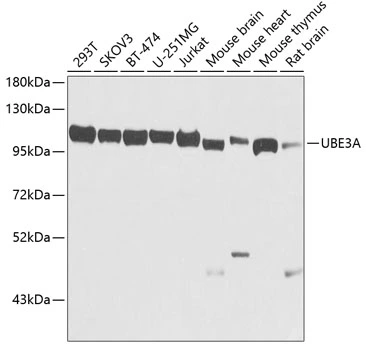
![Various whole cell extracts (30 μg) were separated by 7.5% SDS-PAGE, and the membrane was blotted with UBE3A antibody [HL1660] (GTX637258) diluted at 1:1000. The HRP-conjugated anti-rabbit IgG antibody (GTX213110-01) was used to detect the primary antibody.](https://www.genetex.com/upload/website/prouct_img/normal/GTX637258/GTX637258_T-44753_20220729_WB_22080119_828.webp)
Product group Antibodies
UBE3A antibody [HL1660]GTX637258
ApplicationsWestern Blot
ReactivityHuman
TargetUBE3A
- SizePrice
Product group Antibodies
UBE3A antibodyGTX70169
ApplicationsWestern Blot, ImmunoHistoChemistry
ReactivityHuman
TargetUBE3A
- SizePrice
Product group Antibodies

UBE3A Polyclonal AntibodyCAC13239
ApplicationsImmunoFluorescence, ELISA, ImmunoHistoChemistry
TargetUBE3A
- SizePrice
Product group Antibodies

UBE3A Recombinant Antibody, AbBy Fluor-488 ConjugatedBSM-61643R-BF488
ApplicationsWestern Blot
ReactivityHuman, Mouse, Rat
TargetUBE3A
- SizePrice
Product group Antibodies

Anti-UBE3AY158085
ApplicationsWestern Blot, ELISA, ImmunoHistoChemistry
ReactivityHuman, Mouse, Rat
- SizePrice
Product group Antibodies

Anti-UBE3A AntibodyA31209
ApplicationsWestern Blot, ImmunoHistoChemistry
ReactivityHuman, Mouse, Rat
- SizePrice
Product group Antibodies
UBE3A antibodyGTX55832
ApplicationsWestern Blot, ImmunoHistoChemistry, ImmunoHistoChemistry Paraffin
ReactivityHuman, Mouse, Rat
TargetUBE3A
- SizePrice