


IHC-P analysis of human lung carcinoma tissue using GTX31604 Wip1 antibody. Working concentration : 20 μg/ml
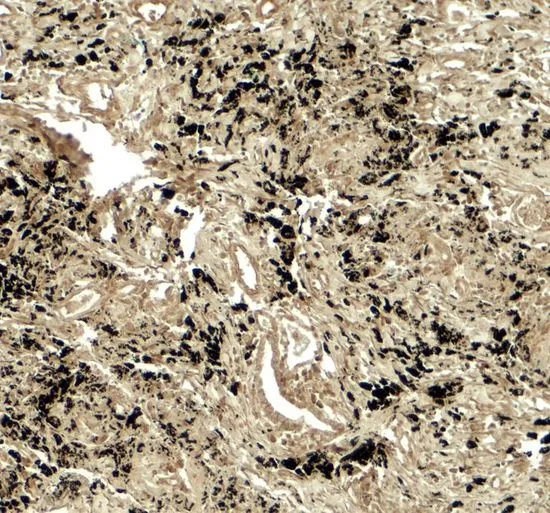
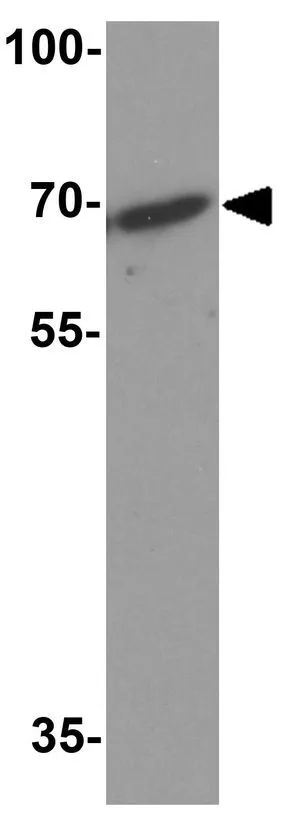
IHC-P analysis of human lung carcinoma tissue using GTX31604 Wip1 antibody. Working concentration : 20 μg/ml
Wip1 antibody
GTX31604

ApplicationsWestern Blot, ELISA, ImmunoHistoChemistry, ImmunoHistoChemistry Paraffin
Product group Antibodies
ReactivityHuman, Mouse, Rat
TargetPPM1D
Overview
- SupplierGeneTex
- Product NameWip1 antibody
- Delivery Days Customer9
- Application Supplier NoteWB: 1 - 2 microg/mL. IHC-P: 5 microg/mL. *Optimal dilutions/concentrations should be determined by the researcher.Not tested in other applications.
- ApplicationsWestern Blot, ELISA, ImmunoHistoChemistry, ImmunoHistoChemistry Paraffin
- CertificationResearch Use Only
- ClonalityPolyclonal
- Concentration1 mg/ml
- ConjugateUnconjugated
- Gene ID8493
- Target namePPM1D
- Target descriptionprotein phosphatase, Mg2+/Mn2+ dependent 1D
- Target synonymsIDDGIP, JDVS, PP2C-DELTA, WIP1, protein phosphatase 1D, protein phosphatase Wip1, wild-type p53-induced phosphatase 1
- HostRabbit
- IsotypeIgG
- Protein IDO15297
- Protein NameProtein phosphatase 1D
- Scientific DescriptionThe protein encoded by this gene is a member of the PP2C family of Ser/Thr protein phosphatases. PP2C family members are known to be negative regulators of cell stress response pathways. The expression of this gene is induced in a p53-dependent manner in response to various environmental stresses. While being induced by tumor suppressor protein TP53/p53, this phosphatase negatively regulates the activity of p38 MAP kinase, MAPK/p38, through which it reduces the phosphorylation of p53, and in turn suppresses p53-mediated transcription and apoptosis. This phosphatase thus mediates a feedback regulation of p38-p53 signaling that contributes to growth inhibition and the suppression of stress induced apoptosis. This gene is located in a chromosomal region known to be amplified in breast cancer. The amplification of this gene has been detected in both breast cancer cell line and primary breast tumors, which suggests a role of this gene in cancer development. [provided by RefSeq, Jul 2008]
- ReactivityHuman, Mouse, Rat
- Storage Instruction-20°C or -80°C,2°C to 8°C
- UNSPSC12352203
Datasheet
Related products
Product group Antibodies

PPM1D Polyclonal AntibodyCAC13167
ApplicationsWestern Blot, ELISA, ImmunoHistoChemistry
ReactivityRat
TargetPPM1D
- SizePrice
Product group Antibodies
References

PPM1D Polyclonal AntibodyBS-2447R
ApplicationsImmunoFluorescence, Western Blot, ELISA, ImmunoCytoChemistry, ImmunoHistoChemistry, ImmunoHistoChemistry Paraffin
ReactivityBovine, Canine, Chicken, Human, Mouse, Porcine, Rat
TargetPPM1D
- SizePrice
Product group Antibodies

PPM1D AntibodyCSB-PA018491ESR1HU
ApplicationsWestern Blot, ELISA, ImmunoHistoChemistry
ReactivityHuman, Rat
TargetPPM1D
- SizePrice

Product group Antibodies

Anti-PPM1D AntibodyA37675
ApplicationsWestern Blot, ImmunoHistoChemistry
ReactivityHuman, Mouse, Rat
- SizePrice
Product group Antibodies

PPM1D / WIP1 AntibodyLS-C831748
ApplicationsELISA, ImmunoHistoChemistry
ReactivityHuman, Mouse
TargetPPM1D
- SizePrice

Product group Antibodies

Anti-PPM1D AntibodyHPA022277
ApplicationsImmunoCytoChemistry, ImmunoHistoChemistry
ReactivityHuman
TargetPPM1D
- SizePrice
Product group Antibodies
References
Wip1 antibodyGTX130700
ApplicationsImmunoFluorescence, Western Blot, ImmunoCytoChemistry
ReactivityHuman
TargetPPM1D
- SizePrice

Product group Antibodies

Anti-PPM1D/WIP1 Picoband(r) AntibodyA01576-1-CARRIER-FREE
ApplicationsFlow Cytometry, ImmunoFluorescence, Western Blot, ELISA, ImmunoCytoChemistry
ReactivityHuman, Mouse, Rat
TargetPPM1D
- SizePrice