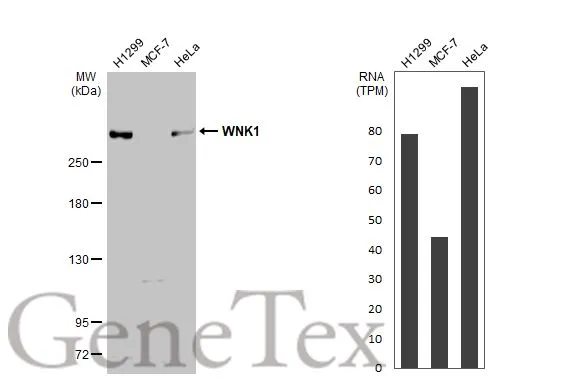
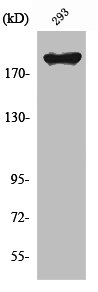
Various whole cell extracts (30 μg) were separated by 5% SDS-PAGE, and the membrane was blotted with WNK1 antibody (GTX106197) diluted at 1:1000. The HRP-conjugated anti-rabbit IgG antibody (GTX213110-01) was used to detect the primary antibody, and the signal was developed with Trident ECL plus-Enhanced. Corresponding RNA expression data for the same cell lines are based on Human Protein Atlas program.
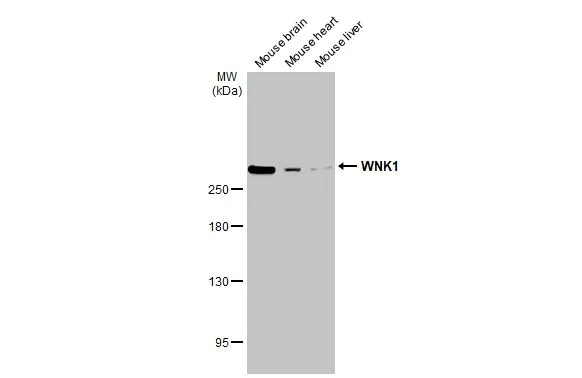
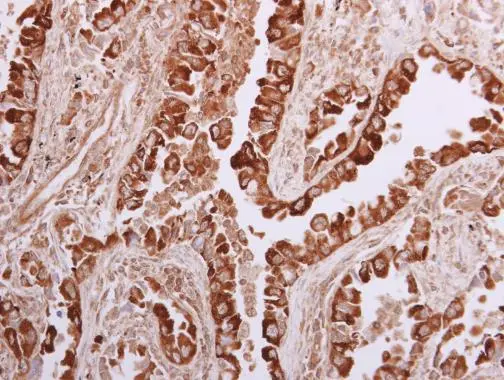
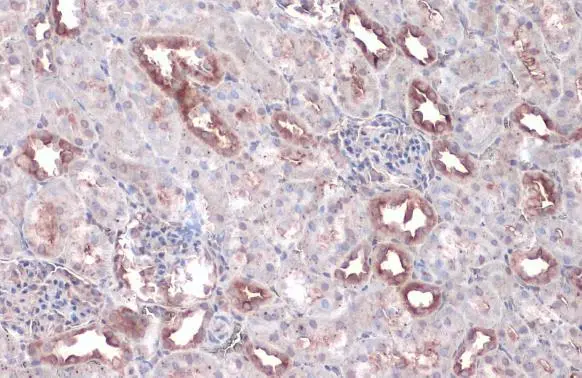
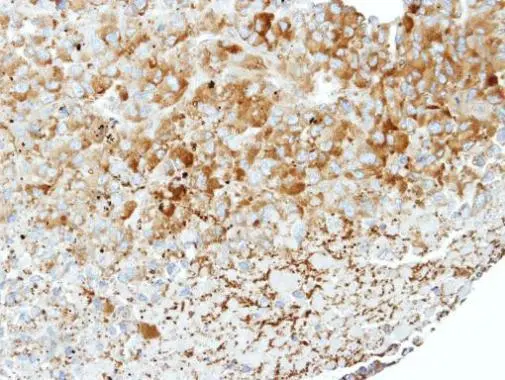
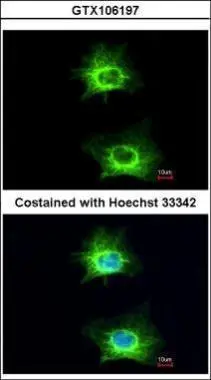
Various whole cell extracts (30 μg) were separated by 5% SDS-PAGE, and the membrane was blotted with WNK1 antibody (GTX106197) diluted at 1:1000. The HRP-conjugated anti-rabbit IgG antibody (GTX213110-01) was used to detect the primary antibody, and the signal was developed with Trident ECL plus-Enhanced. Corresponding RNA expression data for the same cell lines are based on Human Protein Atlas program.
WNK1 antibody
GTX106197

ApplicationsImmunoFluorescence, Western Blot, ImmunoCytoChemistry, ImmunoHistoChemistry, ImmunoHistoChemistry Paraffin
Product group Antibodies
ReactivityHuman, Mouse
TargetWNK1
Overview
- SupplierGeneTex
- Product NameWNK1 antibody
- Delivery Days Customer9
- Application Supplier NoteWB: 1:500-1:3000. ICC/IF: 1:100-1:1000. IHC-P: 1:100-1:1000. *Optimal dilutions/concentrations should be determined by the researcher.Not tested in other applications.
- ApplicationsImmunoFluorescence, Western Blot, ImmunoCytoChemistry, ImmunoHistoChemistry, ImmunoHistoChemistry Paraffin
- CertificationResearch Use Only
- ClonalityPolyclonal
- Concentration1.18 mg/ml
- ConjugateUnconjugated
- Gene ID65125
- Target nameWNK1
- Target descriptionWNK lysine deficient protein kinase 1
- Target synonymsHSAN2, HSN2, KDP, PPP1R167, PRKWNK1, PSK, p65, serine/threonine-protein kinase WNK1, erythrocyte 65 kDa protein, prostate-derived sterile 20-like kinase, protein kinase with no lysine 1, protein phosphatase 1, regulatory subunit 167, serine/threonine-protein kinase WNK1 1, serine/threonine-protein kinase WNK1 2
- HostRabbit
- IsotypeIgG
- Protein IDQ9H4A3
- Protein NameSerine/threonine-protein kinase WNK1
- Scientific DescriptionThe WNK1 gene encodes a cytoplasmic serine-threonine kinase expressed in distal nephron.[supplied by OMIM]
- ReactivityHuman, Mouse
- Storage Instruction-20°C or -80°C,2°C to 8°C
- UNSPSC41116161
Datasheet
Related products
Product group Antibodies

Anti-WNK1 AntibodyA96108
ApplicationsWestern Blot, ELISA, ImmunoHistoChemistry
ReactivityHuman, Mouse, Rat
- SizePrice
Product group Antibodies

Anti-WNK1 Antibody144-02569
ApplicationsImmunoFluorescence, Western Blot
ReactivityHuman, Mouse
TargetWNK1
- SizePrice
Product group Antibodies

WNK1 AntibodyLS-C749207
ApplicationsWestern Blot
ReactivityHuman, Mouse, Rat
TargetWNK1
- SizePrice
Product group Antibodies

WNK1 Recombinant AntibodyBSM-54375R
ApplicationsImmunoFluorescence, Western Blot, ImmunoHistoChemistry, ImmunoHistoChemistry Frozen, ImmunoHistoChemistry Paraffin
ReactivityHuman, Mouse, Rat
TargetWNK1
- SizePrice
Product group Antibodies

ApplicationsWestern Blot, ELISA, ImmunoCytoChemistry, ImmunoHistoChemistry, ImmunoHistoChemistry Frozen, ImmunoHistoChemistry Paraffin
ReactivityPorcine
TargetWNK1
- SizePrice
Product group Antibodies

WNK1 AntibodyCSB-PA004493
ApplicationsWestern Blot, ELISA, ImmunoHistoChemistry
ReactivityHuman, Mouse, Rat
TargetWNK1
- SizePrice

Product group Antibodies

Anti-WNK1 AntibodyHPA046541
ApplicationsImmunoCytoChemistry
ReactivityHuman
TargetWNK1
- SizePrice
![WNK1 antibody [HL2184] detects WNK1 protein at cytoplasm by immunohistochemical analysis. Sample: Paraffin-embedded rat cerebellum. WNK1 stained by WNK1 antibody [HL2184] (GTX638188) diluted at 1:50. Antigen Retrieval: Citrate buffer, pH 6.0, 15 min](https://www.genetex.com/upload/website/prouct_img/normal/GTX638188/GTX638188_T-44935_20230217_IHC-P_R_23030219_792.webp)
Product group Antibodies
WNK1 antibody [HL2184]GTX638188
ApplicationsImmunoFluorescence, Western Blot, ImmunoCytoChemistry, ImmunoHistoChemistry, ImmunoHistoChemistry Paraffin
ReactivityHuman, Mouse, Rat
TargetWNK1
- SizePrice
Product group Antibodies
References
WNK1 antibodyGTX32973
ApplicationsImmunoFluorescence, Western Blot, ImmunoCytoChemistry
ReactivityHuman, Mouse
TargetWNK1
- SizePrice