

Anti-AKT1/2/3 Antibody
ER1901-33

ApplicationsFlow Cytometry, ImmunoFluorescence, Western Blot, ImmunoHistoChemistry, ImmunoHistoChemistry Paraffin
Product group Antibodies
ReactivityHuman, Mouse
TargetAKT1
Overview
- SupplierHUABIO
- Product NameAnti-AKT1/2/3 Antibody
- Delivery Days Customer7
- ApplicationsFlow Cytometry, ImmunoFluorescence, Western Blot, ImmunoHistoChemistry, ImmunoHistoChemistry Paraffin
- Applications SupplierWB,IF-Cell,IHC-P,FC
- CertificationResearch Use Only
- ClonalityPolyclonal
- Concentration1 mg/ml
- ConjugateUnconjugated
- Gene ID207
- Target nameAKT1
- Target descriptionAKT serine/threonine kinase 1
- Target synonymsAKT, PKB, PKB-ALPHA, PRKBA, RAC, RAC-ALPHA, RAC-alpha serine/threonine-protein kinase, AKT1m, PKB alpha, RAC-PK-alpha, protein kinase B alpha, proto-oncogene c-Akt, rac protein kinase alpha, serine-threonine protein kinase, v-akt murine thymoma viral oncogene homolog 1, v-akt murine thymoma viral oncogene-like protein 1
- HostRabbit
- IsotypeIgG
- Protein IDP31749
- Protein NameRAC-alpha serine/threonine-protein kinase
- Scientific DescriptionAKT3 is one of 3 closely related serine/threonine-protein kinases (AKT1, AKT2 and AKT3) called the AKT kinase, and which regulate many processes including metabolism, proliferation, cell survival, growth and angiogenesis. This is mediated through serine and/or threonine phosphorylation of a range of downstream substrates. Over 100 substrate candidates have been reported so far, but for most of them, no isoform specificity has been reported. AKT3 is the least studied AKT isoform. It plays an important role in brain development and is crucial for the viability of malignant glioma cells. AKT3 isoform may also be the key molecule in up-regulation and down-regulation of MMP13 via IL13. Required for the coordination of mitochondrial biogenesis with growth factor-induced increases in cellular energy demands. Down-regulation by RNA interference reduces the expression of the phosphorylated form of BAD, resulting in the induction of caspase-dependent apoptosis.
- ReactivityHuman, Mouse
- Reactivity SupplierHuman,Mouse
- Storage Instruction-20°C,2°C to 8°C
- UNSPSC41116161
Datasheet
Related products

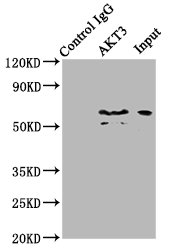
Product group Antibodies

AKT3 AntibodyCSB-PA15929A0RB
ApplicationsImmunoPrecipitation, ELISA
ReactivityHuman, Mouse
TargetAKT3
- SizePrice

Product group Antibodies

Anti-AKT3 Antibody Picoband(r)A00520-2-CARRIER-FREE
ApplicationsWestern Blot, ELISA
ReactivityHuman, Mouse, Rat
TargetAKT3
- SizePrice
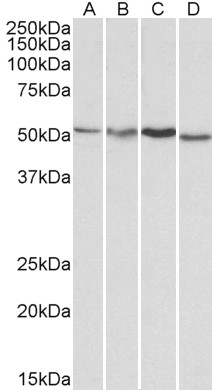
Product group Antibodies

Anti-AKT3 AntibodyA83410
ApplicationsWestern Blot, ELISA, ImmunoHistoChemistry
ReactivityHuman, Mouse, Rat
- SizePrice
Product group Antibodies

AKT3 AntibodyLS-C747979
ApplicationsWestern Blot
ReactivityHuman, Mouse, Rat
TargetAKT3
- SizePrice
Product group Antibodies

Goat anti-AKT3EB06562
ApplicationsWestern Blot, ELISA, ImmunoHistoChemistry
ReactivityBovine, Canine, Human, Mouse, Rat
TargetAKT3
- SizePrice

Product group Antibodies

Anti-AKT3 AntibodyHPA026441
ApplicationsWestern Blot, ImmunoHistoChemistry
ReactivityHuman
TargetAKT3
- SizePrice

Product group Antibodies

AKT3 Polyclonal AntibodyCAC15010
ApplicationsImmunoPrecipitation, ELISA
ReactivityMouse
TargetAKT3
- SizePrice
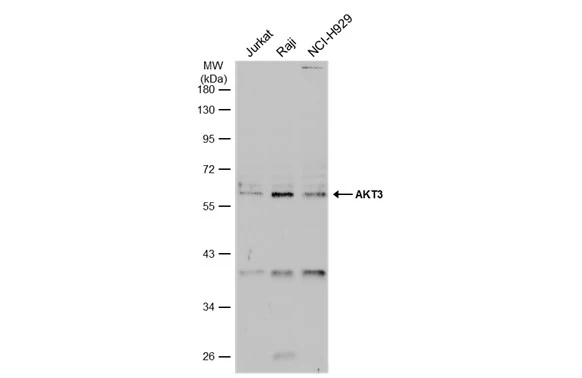
Product group Antibodies

AKT3 antibodyGTX113312
ApplicationsImmunoFluorescence, Western Blot, ImmunoCytoChemistry, ImmunoHistoChemistry, ImmunoHistoChemistry Paraffin
ReactivityHuman, Mouse
TargetAKT3
- SizePrice