

Anti-SRC Antibody
R1312-9

ApplicationsImmunoFluorescence, Western Blot
Product group Antibodies
ReactivityHuman, Mouse, Rat
TargetSRC
Overview
- SupplierHUABIO
- Product NameAnti-SRC Antibody
- Delivery Days Customer7
- ApplicationsImmunoFluorescence, Western Blot
- Applications SupplierWB,IF-Cell
- CertificationResearch Use Only
- ClonalityPolyclonal
- Concentration1 mg/ml
- ConjugateUnconjugated
- Gene ID6714
- Target nameSRC
- Target descriptionSRC proto-oncogene, non-receptor tyrosine kinase
- Target synonymsASV, SRC1, THC6, c-SRC, p60-Src, proto-oncogene tyrosine-protein kinase Src, proto-oncogene c-Src, protooncogene SRC, Rous sarcoma, tyrosine kinase pp60c-src, tyrosine-protein kinase SRC-1, v-src avian sarcoma (Schmidt-Ruppin A-2) viral oncogene homolog
- HostRabbit
- IsotypeIgG
- Protein IDP05480
- Protein NameProto-oncogene tyrosine-protein kinase Src
- Scientific DescriptionSrc (pronounced sarc as it is short for sarcoma) is a proto-oncogene encoding a tyrosine kinase. It belongs to a family of non-receptor tyrosine kinases called Src family kinases. c-Src is made up of 6 functional regions: Src homology (SH) 4 domain (SH4 domain), unique region, SH3 domain, SH2 domain, catalytic domain and short regulatory tail. When Src is inactive, the phosphorylated tyrosine group at the 527 position interacts with the SH2 domain which helps the SH3 domain interact with the linker domain and consequently keeps the inactive unit tightly bound. The activation of c-Src causes the dephosphorylation of the tyrosine 527 which causes the structure to be destabilized and then result in the opening up of the SH3, SH2 and the kinase domains and autophosphorylation of tyrosine 416. The activation of the c-Src pathway has been observed in about 50% of tumors from colon, liver, lung, breast and the pancreas.
- ReactivityHuman, Mouse, Rat
- Reactivity SupplierHuman,Mouse,Rat
- Storage Instruction-20°C,2°C to 8°C
- UNSPSC41116161
Datasheet
Related products

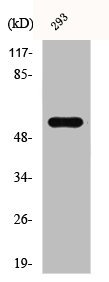
Product group Antibodies

SRC AntibodyCSB-PA001803
ApplicationsImmunoFluorescence, Western Blot, ELISA, ImmunoHistoChemistry
ReactivityHuman, Mouse, Rat
TargetSRC
- SizePrice
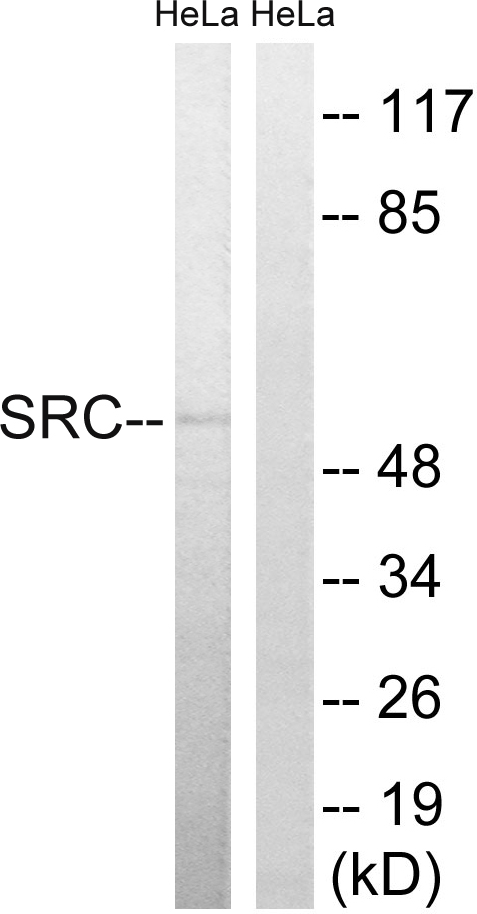
Product group Antibodies

Anti-Src AntibodyA96431
ApplicationsWestern Blot, ELISA, ImmunoHistoChemistry
ReactivityHuman, Mouse, Rat
- SizePrice
Product group Antibodies

SRC AntibodyLS-C831467
ApplicationsWestern Blot, ImmunoHistoChemistry
ReactivityHuman, Mouse, Rat
TargetSRC
- SizePrice

Product group Antibodies

Anti-SRC AntibodyHPA030875
ApplicationsWestern Blot, ImmunoCytoChemistry
ReactivityHuman
TargetSRC
- SizePrice
Product group Antibodies

SRC Polyclonal AntibodyCAC15899
ApplicationsWestern Blot, ELISA, ImmunoHistoChemistry
TargetSRC
- SizePrice

Product group Antibodies

Anti-Src Antibody Picoband(r)PB9059-CARRIER-FREE
ApplicationsFlow Cytometry, Western Blot, ImmunoHistoChemistry
ReactivityHuman
TargetSRC
- SizePrice
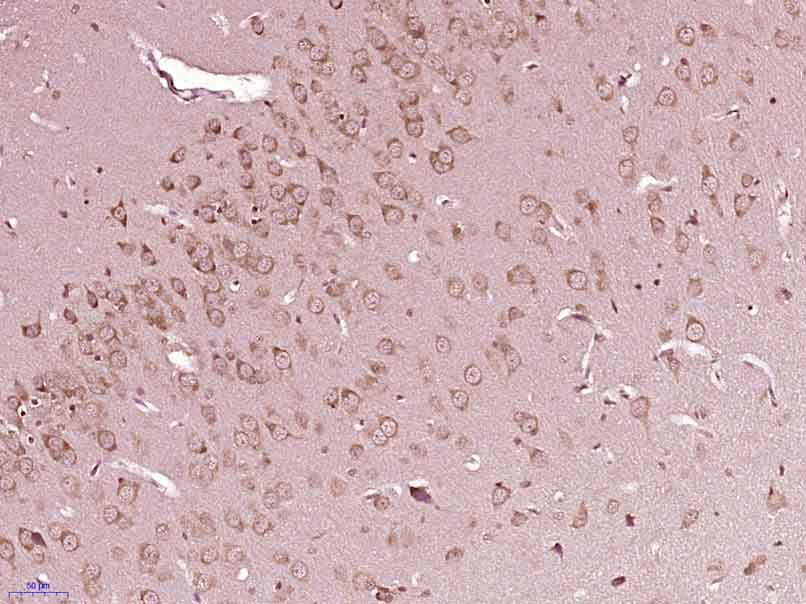
Product group Antibodies

SRC Polyclonal AntibodyBS-1135R
ApplicationsImmunoFluorescence, Western Blot, ELISA, ImmunoCytoChemistry, ImmunoHistoChemistry, ImmunoHistoChemistry Frozen, ImmunoHistoChemistry Paraffin
ReactivityBovine, Canine, Human, Mouse, Rat
TargetSRC
- SizePrice
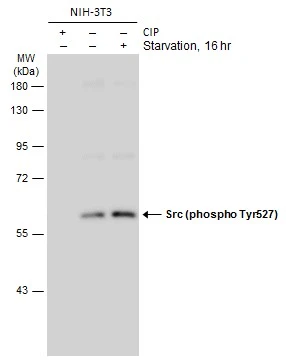
Product group Antibodies

Src (phospho Tyr530) antibodyGTX133473
ApplicationsWestern Blot
ReactivityHuman, Mouse, Rat
TargetSRC
- SizePrice
Product group Antibodies

Anti-SRC Antibody144-61603
ApplicationsImmunoPrecipitation, Western Blot
ReactivityHuman, Mouse, Rat
TargetSRC
- SizePrice