

Western Blot analysis of NIH/3T3 cell using CALR Polyclonal Antibody at dilution of 1:800
Western Blot analysis of NIH/3T3 cell using CALR Polyclonal Antibody at dilution of 1:800
CALR Polyclonal Antibody
E-AB-10352

ApplicationsWestern Blot, ImmunoHistoChemistry
Product group Antibodies
TargetCALR
Overview
- SupplierElabscience
- Product NameCALR Polyclonal Antibody
- Delivery Days Customer12
- ApplicationsWestern Blot, ImmunoHistoChemistry
- Applications SupplierELISA WB IHC
- CertificationResearch Use Only
- ClonalityPolyclonal
- Concentration0.4 mg/ml
- ConjugateUnconjugated
- Gene ID811
- Target nameCALR
- Target descriptioncalreticulin
- Target synonymsCALR1, CRT, HEL-S-99n, RO, SSA, cC1qR, calreticulin, CRP55, ERp60, HACBP, Sicca syndrome antigen A (autoantigen Ro; calreticulin), calregulin, endoplasmic reticulum resident protein 60, epididymis secretory sperm binding protein Li 99n, grp60
- HostRabbit
- IsotypeIgG
- Protein IDP27797
- Protein NameCalreticulin
- Scientific DescriptionCalreticulin is a multifunctional protein that acts as a major Ca(2+)-binding (storage) protein in the lumen of the endoplasmic reticulum. It is also found in the nucleus, suggesting that it may have a role in transcription regulation. Calreticulin binds to the synthetic peptide KLGFFKR, which is almost identical to an amino acid sequence in the DNA-binding domain of the superfamily of nuclear receptors. Calreticulin binds to antibodies in certain sera of systemic lupus and Sjogren patients which contain anti-Ro/SSA antibodies, it is highly conserved among species, and it is located in the endoplasmic and sarcoplasmic reticulum where it may bind calcium. The amino terminus of calreticulin interacts with the DNA-binding domain of the glucocorticoid receptor and prevents the receptor from binding to its specific glucocorticoid response element.
- Storage Instruction-20°C
- UNSPSC41116161
MSDS
Related products
Product group Antibodies

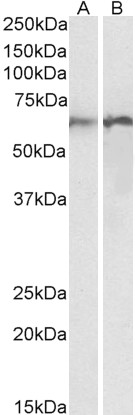
ApplicationsWestern Blot, ELISA
ReactivityHuman, Rat
- SizePrice
Product group Antibodies

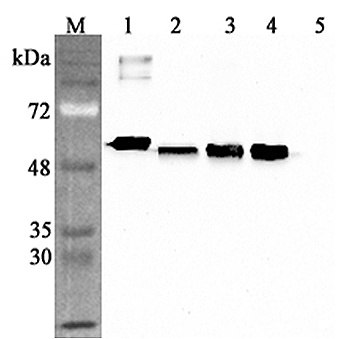
anti-Calreticulin (human), pAbAG-25A-0094
ApplicationsWestern Blot, ELISA
ReactivityHuman
TargetCALR
- SizePrice
Product group Antibodies

Anti-CALR [SAIC-16D-6B9]Ab00309-1.1
ApplicationsMass Spectrometry, Western Blot, ELISA
ReactivityHuman
TargetCALR
- SizePrice


Product group Antibodies

Anti-Calreticulin/CALR Antibody Picoband(r)A00894-1-CARRIER-FREE
ApplicationsFlow Cytometry, Western Blot, ELISA, ImmunoHistoChemistry
ReactivityHuman, Mouse, Rat
TargetCALR
- SizePrice
Product group Antibodies

Anti-CALR Antibody144-01066
ApplicationsImmunoFluorescence, ImmunoPrecipitation, Western Blot
ReactivityHuman, Mouse, Rat
TargetCALR
- SizePrice
Product group Antibodies
References

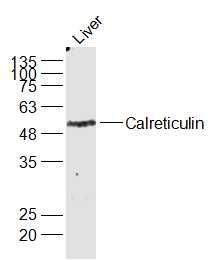
Calreticulin Polyclonal AntibodyBS-5913R
ApplicationsFlow Cytometry, ImmunoFluorescence, Western Blot, ELISA, ImmunoCytoChemistry, ImmunoHistoChemistry, ImmunoHistoChemistry Frozen, ImmunoHistoChemistry Paraffin
ReactivityHuman
TargetCALR
- SizePrice
Product group Antibodies

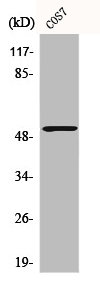
CALR AntibodyCSB-PA001196
ApplicationsImmunoFluorescence, Western Blot, ELISA, ImmunoHistoChemistry
ReactivityHuman, Monkey, Mouse, Rat
TargetCALR
- SizePrice
Product group Antibodies
References

Goat anti-calreticulinEB12387
ApplicationsWestern Blot, ELISA
ReactivityBovine, Canine, Human, Mouse, Porcine, Rat
TargetCALR
- SizePrice
Product group Antibodies

Calr Polyclonal AntibodyCAC07249
ApplicationsImmunoFluorescence, Western Blot, ELISA, ImmunoHistoChemistry
ReactivityMouse, Rat
TargetCALR
- SizePrice