

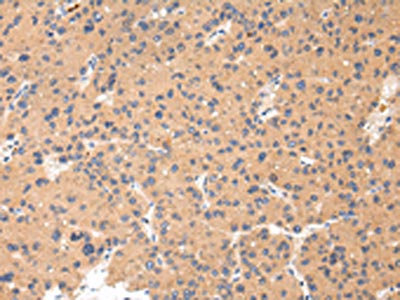
The image on the left is immunohistochemistry of paraffin-embedded Human liver cancer tissue using CSB-PA039740(CTSK Antibody) at dilution 1/20, on the right is treated with synthetic peptide. (Original magnification: x200)
The image on the left is immunohistochemistry of paraffin-embedded Human liver cancer tissue using CSB-PA039740(CTSK Antibody) at dilution 1/20, on the right is treated with synthetic peptide. (Original magnification: x200)
CTSK Antibody
CSB-PA039740

ApplicationsELISA, ImmunoHistoChemistry
Product group Antibodies
ReactivityHuman, Mouse, Rat
TargetCTSK
Overview
- SupplierCusabio
- Product NameCTSK Antibody
- Delivery Days Customer20
- ApplicationsELISA, ImmunoHistoChemistry
- CertificationResearch Use Only
- ClonalityPolyclonal
- ConjugateUnconjugated
- Gene ID1513
- Target nameCTSK
- Target descriptioncathepsin K
- Target synonymsCTS02, CTSO, CTSO1, CTSO2, PKND, PYCD, cathepsin K, cathepsin O, cathepsin O1, cathepsin O2, cathepsin X
- HostRabbit
- IsotypeIgG
- Protein IDP43235
- Protein NameCathepsin K
- Scientific DescriptionThe protein encoded by this gene is a lysosomal cysteine proteinase involved in bone remodeling and resorption. This protein, which is a member of the peptidase C1 protein family, is predominantly expressed in osteoclasts. However, the encoded protein is also expressed in a significant fraction of human breast cancers, where it could contribute to tumor invasiveness. Mutations in this gene are the cause of pycnodysostosis, an autosomal recessive disease characterized by osteosclerosis and short stature.
- ReactivityHuman, Mouse, Rat
- Storage Instruction-20°C or -80°C
- UNSPSC41116161
Related products
Product group Antibodies

Anti-CTSK Antibody144-61425
ApplicationsWestern Blot
ReactivityHuman, Mouse, Rat
TargetCTSK
- SizePrice
Product group Antibodies

Cathepsin K antibody, InternalGTX81488
ApplicationsFlow Cytometry, Western Blot, ImmunoHistoChemistry, ImmunoHistoChemistry Paraffin
ReactivityHuman
TargetCTSK
- SizePrice
Product group Antibodies

Ctsk Polyclonal AntibodyCAC10607
ApplicationsWestern Blot, ELISA, ImmunoHistoChemistry
ReactivityRat
TargetCTSK
- SizePrice
Product group Antibodies
References

Cathepsin K Polyclonal AntibodyBS-1611R
ApplicationsImmunoFluorescence, Western Blot, ImmunoHistoChemistry, ImmunoHistoChemistry Frozen, ImmunoHistoChemistry Paraffin
ReactivityMouse, Rat
TargetCTSK
- SizePrice
Product group Antibodies
CTSK AntibodyCSB-PA006192ESR1HU
ApplicationsWestern Blot, ELISA, ImmunoHistoChemistry
ReactivityHuman, Rat
TargetCTSK
- SizePrice

Product group Antibodies

Anti-CTSK AntibodyA28771
ApplicationsWestern Blot
ReactivityHuman, Mouse, Rat
- SizePrice

Product group Antibodies

Anti-CTSK AntibodyHPA050346
ApplicationsImmunoCytoChemistry
ReactivityHuman
TargetCTSK
- SizePrice
Product group Antibodies

ApplicationsImmunoFluorescence, Western Blot, ELISA
ReactivityBovine, Canine, Human, Mouse, Porcine, Rat
TargetCTSK
- SizePrice
Product group Antibodies

CTSK / Cathepsin K AntibodyLS-C331688
ApplicationsWestern Blot, ImmunoHistoChemistry
ReactivityAvian, Human, Mouse, Rat
TargetCTSK
- SizePrice