

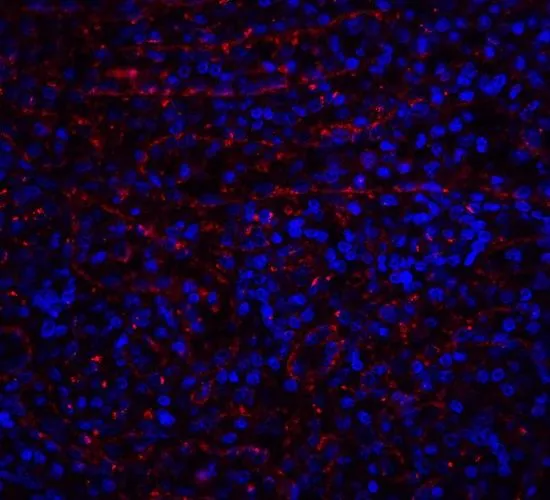
IHC-P analysis of human spleen tissue using GTX28414 DR4 antibody. Working concentration : 20 μg/ml
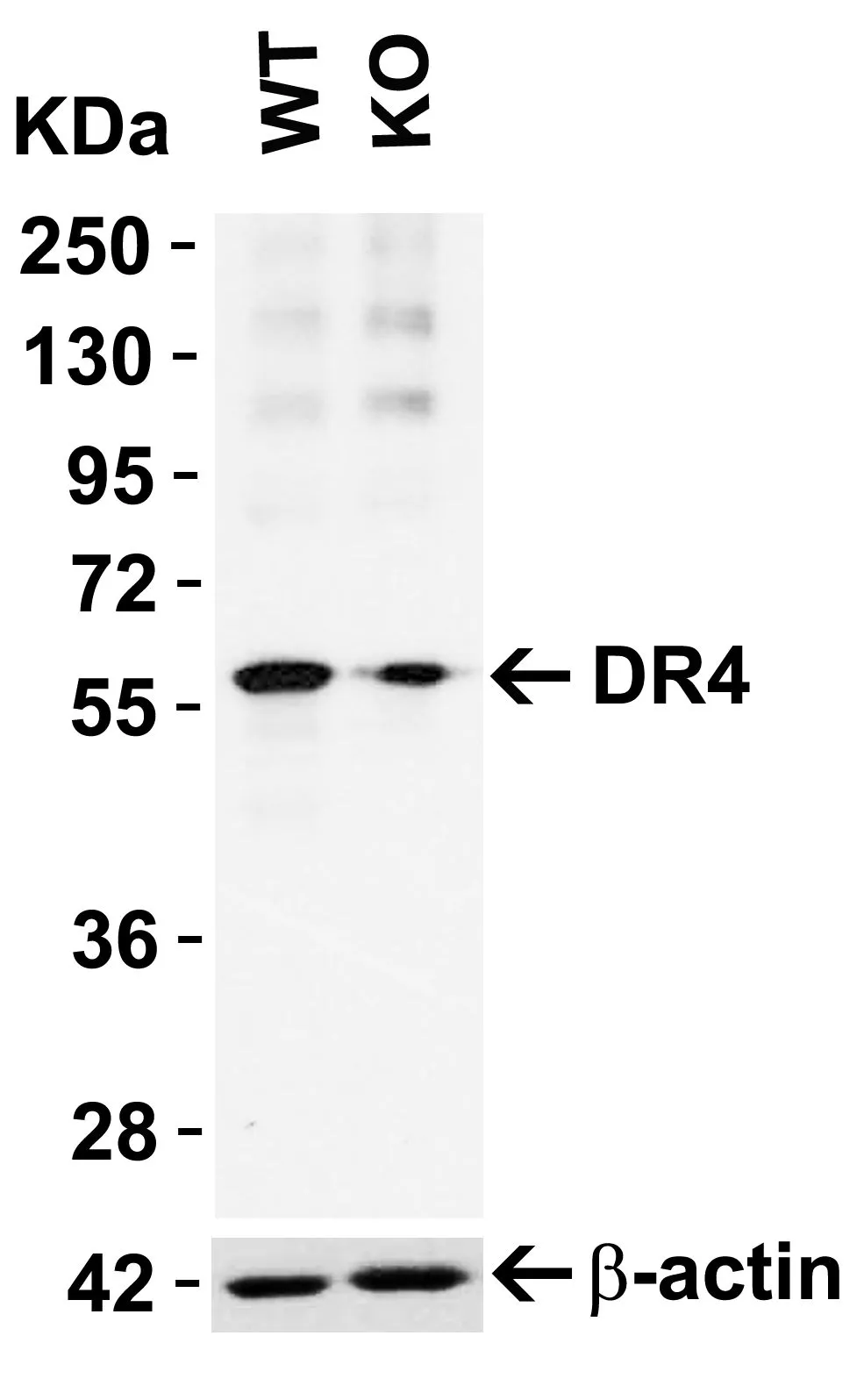
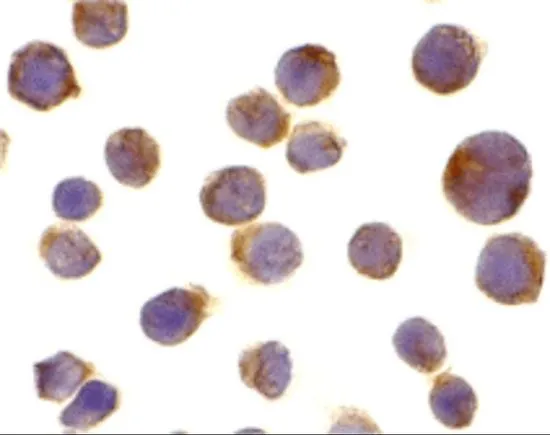
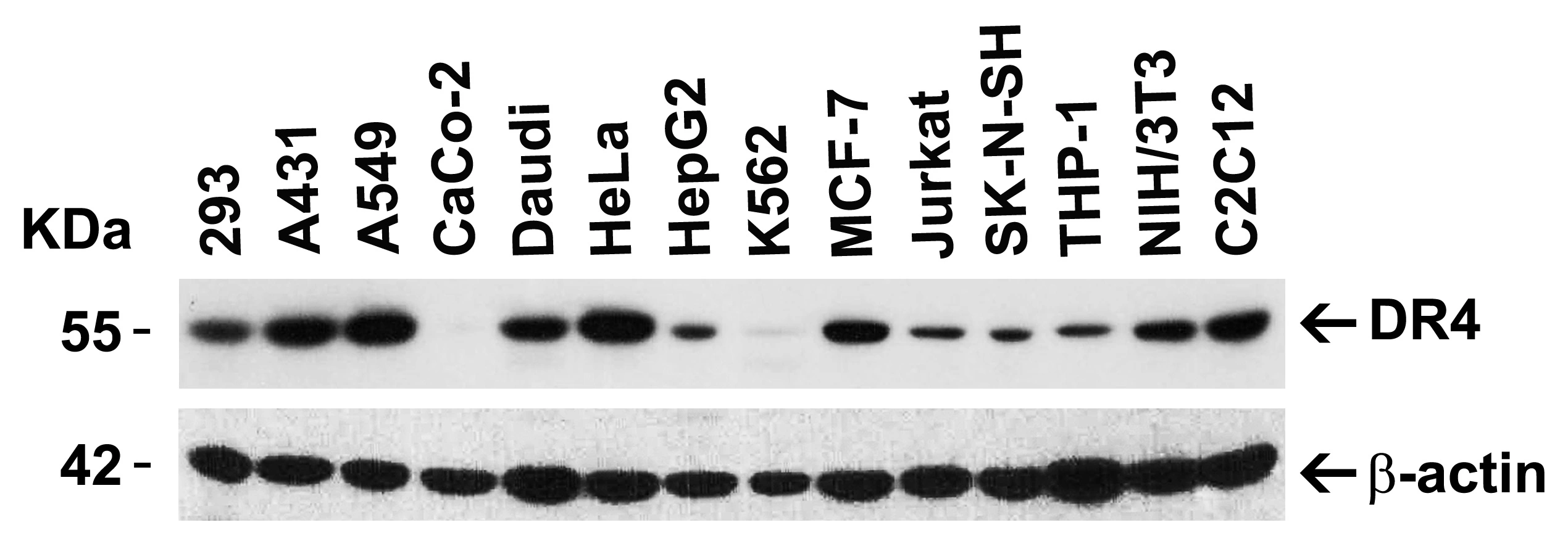
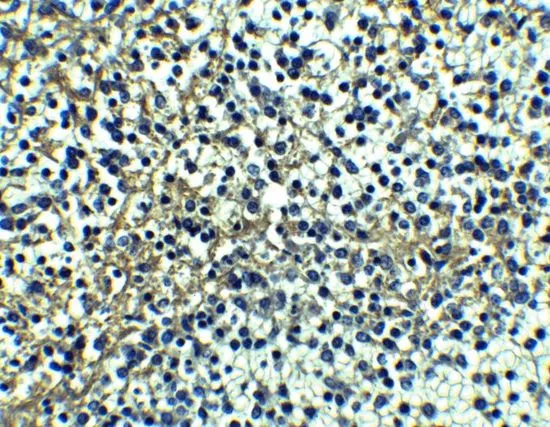
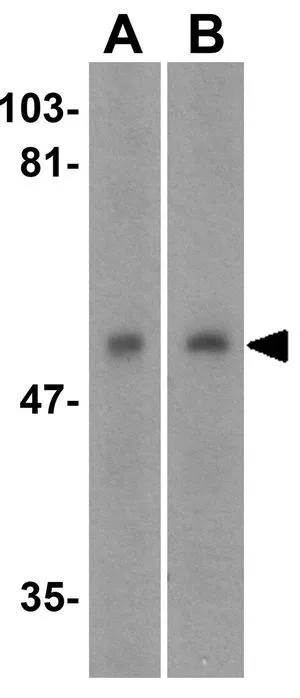
IHC-P analysis of human spleen tissue using GTX28414 DR4 antibody. Working concentration : 20 μg/ml
DR4 antibody
GTX28414

ApplicationsImmunoFluorescence, Western Blot, ELISA, ImmunoCytoChemistry, ImmunoHistoChemistry, ImmunoHistoChemistry Paraffin
Product group Antibodies
ReactivityHuman, Mouse, Rat
TargetTNFRSF10A
Overview
- SupplierGeneTex
- Product NameDR4 antibody
- Delivery Days Customer9
- Application Supplier NoteWB: 1 microg/mL. ICC/IF: 10 microg/mL. IHC-P: 5 microg/mL. *Optimal dilutions/concentrations should be determined by the researcher.Not tested in other applications.
- ApplicationsImmunoFluorescence, Western Blot, ELISA, ImmunoCytoChemistry, ImmunoHistoChemistry, ImmunoHistoChemistry Paraffin
- CertificationResearch Use Only
- ClonalityPolyclonal
- Concentration1 mg/ml
- ConjugateUnconjugated
- Gene ID8797
- Target nameTNFRSF10A
- Target descriptionTNF receptor superfamily member 10a
- Target synonymsAPO2, CD261, DR4, TRAILR-1, TRAILR1, tumor necrosis factor receptor superfamily member 10A, TNF-related apoptosis-inducing ligand receptor 1, TRAIL receptor 1, TRAIL-R1, cytotoxic TRAIL receptor, death receptor 4, tumor necrosis factor receptor superfamily, member 10a
- HostRabbit
- IsotypeIgG
- Protein IDO00220
- Protein NameTumor necrosis factor receptor superfamily member 10A
- Scientific DescriptionApoptosis, or programmed cell death, occurs during normal cellular differentiation and development of multicellular organisms. Apoptosis is induced by certain cytokines including TNF and Fas ligand of the TNF family through their death domain containing receptors, TNFR1and Fas. A novel cell death receptor was recently identified and designated DR4 (for death receptor4)(1). The ligand for this novel death receptor has been identified and termed TRAIL (2,3), which is a new member in the TNF family. DR4 is also called TRAIL receptor-1 (TRAIL-R1)(4). DR4 is expressed in most of human tissues including spleen, peripheral blood leukocytes, small intestine and thymus. Like TNFR1, Fas and DR3, DR4mediates apoptosis and NF-kB activation in many tissues and cells.
- ReactivityHuman, Mouse, Rat
- Storage Instruction-20°C or -80°C,2°C to 8°C
- UNSPSC41116161
References
- Virus-infection in cochlear supporting cells induces audiosensory receptor hair cell death by TRAIL-induced necroptosis. Hayashi Y et al., 2021, PLoS OneRead this paper
- MEDI3039, a novel highly potent tumor necrosis factor (TNF)-related apoptosis-inducing ligand (TRAIL) receptor 2 agonist, causes regression of orthotopic tumors and inhibits outgrowth of metastatic triple-negative breast cancer. Greer YE et al., 2019 Feb 18, Breast Cancer ResRead this paper
- The TRAIL receptor agonist drozitumab targets basal B triple-negative breast cancer cells that express vimentin and Axl. Dine JL et al., 2016 Jan, Breast Cancer Res TreatRead this paper
- Luteolin sensitizes human 786-O renal cell carcinoma cells to TRAIL-induced apoptosis. Ou YC et al., 2014 Apr 1, Life SciRead this paper
- WEE1 inhibition sensitizes basal breast cancer cells to TRAIL-induced apoptosis. Garimella SV et al., 2012 Jan, Mol Cancer ResRead this paper
Datasheet
Related products
Product group Antibodies

anti-TRAIL-R1 (human), mAb (HS101)AG-20B-0022
ApplicationsFlow Cytometry, ImmunoPrecipitation, ImmunoCytoChemistry, Neutralisation/Blocking
ReactivityHuman
TargetTNFRSF10A
- SizePrice
Product group Antibodies

Anti-TNFRSF10A Antibody144-06267
ApplicationsWestern Blot, ImmunoHistoChemistry
ReactivityHuman
TargetTNFRSF10A
- SizePrice
Product group Antibodies

Anti-DR4 [T1014G03 ]AB04096-10.0
ApplicationsELISA, Other Application
ReactivityHuman
TargetTNFRSF10A
- SizePrice
Product group Antibodies

Anti-DR4/TNFRSF10A Antibody Picoband(r)A02152-CARRIER-FREE
ApplicationsImmunoFluorescence, Western Blot, ImmunoCytoChemistry
ReactivityHuman, Mouse, Rat
TargetTNFRSF10A
- SizePrice
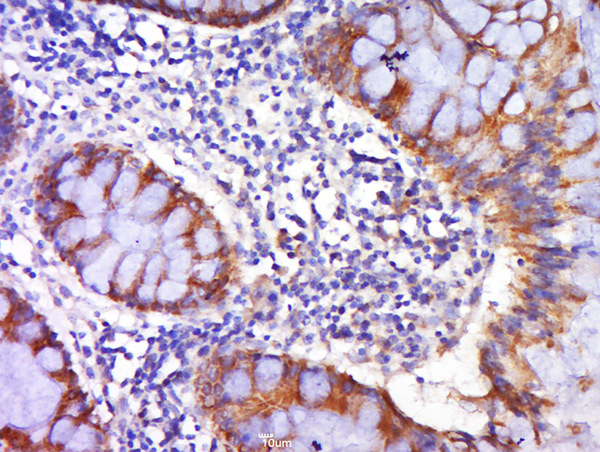
Product group Antibodies

TNFRSF10A Polyclonal AntibodyBS-0591R
ApplicationsWestern Blot, ELISA
ReactivityHuman
TargetTNFRSF10A
- SizePrice
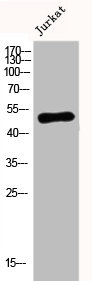
Product group Antibodies

TNFRSF10A AntibodyCSB-PA002191
ApplicationsImmunoFluorescence, Western Blot, ELISA
ReactivityHuman, Monkey
TargetTNFRSF10A
- SizePrice
Product group Antibodies

TNFRSF10A Polyclonal AntibodyCAC13229
ApplicationsImmunoFluorescence, ImmunoPrecipitation, Western Blot, ELISA, ImmunoHistoChemistry
TargetTNFRSF10A
- SizePrice
![WB analysis of HeLa cell lysate using GTX13890 DR4 antibody [32A242]. Dilution : 2 μg/ml Loading : 20μg](https://www.genetex.com/upload/website/prouct_img/normal/GTX13890/GTX13890_1051_WB_w_23060620_532.webp)
Product group Antibodies
DR4 antibody [32A242]GTX13890
ApplicationsImmunoFluorescence, Western Blot, ImmunoCytoChemistry
ReactivityHuman, Mouse, Rat
TargetTNFRSF10A
- SizePrice
Product group Antibodies
DR4 antibody [DR-4-02] (Low Endotoxin)GTX00590-00
ApplicationsFunctional Assay, Flow Cytometry, ImmunoFluorescence, ImmunoPrecipitation, ImmunoCytoChemistry
ReactivityHuman
TargetTNFRSF10A
- SizePrice
![FACS analysis of partially CD261-transfected HEK-293 cells using GTX00590-07 DR4 antibody [DR-4-02] (APC).](https://www.genetex.com/upload/website/prouct_img/normal/GTX00590-07/GTX00590-07_20191025_AP_006_98_w_23053121_181.webp)
Product group Antibodies
DR4 antibody [DR-4-02] (APC)GTX00590-07
ApplicationsFlow Cytometry
ReactivityHuman
TargetTNFRSF10A
- SizePrice