

Estrogen Receptor beta antibody [14C8]
GTX70174

ApplicationsDot Blot, Flow Cytometry, ImmunoFluorescence, Western Blot, ChIP Chromatin ImmunoPrecipitation, ImmunoCytoChemistry, ImmunoHistoChemistry, ImmunoHistoChemistry Frozen, ImmunoHistoChemistry Paraffin
Product group Antibodies
ReactivityHuman, Monkey, Mouse
TargetESR2
Overview
- SupplierGeneTex
- Product NameEstrogen Receptor beta antibody [14C8]
- Delivery Days Customer9
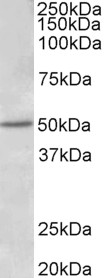
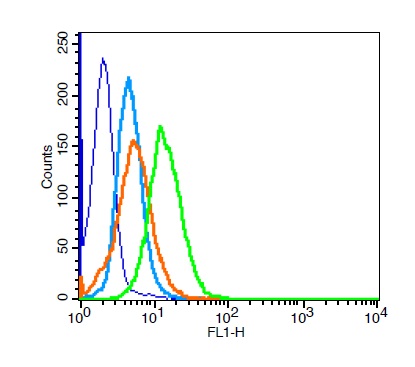
- Application Supplier NoteFor IHC, a recommended protocol is provided. For WB: Use at a concentration of 1-5 microg/ml. For ChIP: Use at an dependent assay. Optimal dilutions/concentrations should be determined by the researcher.
- ApplicationsDot Blot, Flow Cytometry, ImmunoFluorescence, Western Blot, ChIP Chromatin ImmunoPrecipitation, ImmunoCytoChemistry, ImmunoHistoChemistry, ImmunoHistoChemistry Frozen, ImmunoHistoChemistry Paraffin
- CertificationResearch Use Only
- ClonalityMonoclonal
- Clone ID14C8
- Concentration1.23 mg/ml
- ConjugateUnconjugated
- Gene ID2100
- Target nameESR2
- Target descriptionestrogen receptor 2
- Target synonymsER-BETA, ESR-BETA, ESRB, ESTRB, Erb, NR3A2, ODG8, estrogen receptor beta, estrogen receptor beta 2, estrogen receptor beta 4, nuclear receptor subfamily 3 group A member 2, oestrogen receptor beta
- HostMouse
- IsotypeIgG2b
- Protein IDQ92731
- Protein NameEstrogen receptor beta
- Scientific DescriptionThis gene encodes a member of the family of estrogen receptors and superfamily of nuclear receptor transcription factors. The gene product contains an N-terminal DNA binding domain and C-terminal ligand binding domain and is localized to the nucleus, cytoplasm, and mitochondria. Upon binding to 17beta-estradiol or related ligands, the encoded protein forms homo- or hetero-dimers that interact with specific DNA sequences to activate transcription. Some isoforms dominantly inhibit the activity of other estrogen receptor family members. Several alternatively spliced transcript variants of this gene have been described, but the full-length nature of some of these variants has not been fully characterized. [provided by RefSeq, Jul 2008]
- ReactivityHuman, Monkey, Mouse
- Storage Instruction-20°C or -80°C,2°C to 8°C
- UNSPSC12352203
References
- Ariyani W, Amano I, Koibuchi N. Isoflavones Mediate Dendritogenesis Mainly through Estrogen Receptor α. Int J Mol Sci. 2023,24(10). doi: 10.3390/ijms24109011Read this paper
- Hojnik M, Sinreih M, Anko M, et al. The Co-Expression of Estrogen Receptors ERα, ERβ, and GPER in Endometrial Cancer. Int J Mol Sci. 2023,24(3). doi: 10.3390/ijms24033009Read this paper
- He Y, Alejo S, Venkata PP, et al. Therapeutic Targeting of Ovarian Cancer Stem Cells Using Estrogen Receptor Beta Agonist. Int J Mol Sci. 2022,23(13). doi: 10.3390/ijms23137159Read this paper
- Young MJ, Chen YC, Wang SA, et al. Estradiol-mediated inhibition of Sp1 decreases miR-3194-5p expression to enhance CD44 expression during lung cancer progression. J Biomed Sci. 2022,29(1):3. doi: 10.1186/s12929-022-00787-1Read this paper
- Pratap UP, Sareddy GR, Liu Z, et al. Histone deacetylase inhibitors enhance estrogen receptor beta expression and augment agonist-mediated tumor suppression in glioblastoma. Neurooncol Adv. 2021,3(1):vdab099. doi: 10.1093/noajnl/vdab099Read this paper
- He M, Yang H, Shi H, et al. Sunitinib increases the cancer stem cells and vasculogenic mimicry formation via modulating the lncRNA-ECVSR/ERβ/Hif2-α signaling. Cancer Lett. 2022,524:15-28. doi: 10.1016/j.canlet.2021.08.028Read this paper
- Ahn HY, Song RY, Ahn HS, et al. Expression of Estrogen and Progesterone Receptors in Papillary Thyroid Carcinoma in Korea. Cancer Res Treat. 2021,53(4):1204-1212. doi: 10.4143/crt.2020.1201Read this paper
- Zhang L, Tian M, Lin J, et al. Estrogen Receptor β1 Expression Patterns Have Different Effects on Epidermal Growth Factor Receptor Tyrosine Kinase Inhibitors' Treatment Response in Epidermal Growth Factor Receptor Mutant Lung Adenocarcinoma. Front Oncol. 2020,10:603883. doi: 10.3389/fonc.2020.603883Read this paper
- Thomas C, Karagounis IV, Srivastava RK, et al. Estrogen Receptor β-Mediated Inhibition of Actin-Based Cell Migration Suppresses Metastasis of Inflammatory Breast Cancer. Cancer Res. 2021,81(9):2399-2414. doi: 10.1158/0008-5472.CAN-20-2743Read this paper
- Varshney MK, Yu NY, Katayama S, et al. Motor Function Deficits in the Estrogen Receptor Beta Knockout Mouse: Role on Excitatory Neurotransmission and Myelination in the Motor Cortex. Neuroendocrinology. 2021,111(1-2):27-44. doi: 10.1159/000506162Read this paper
Datasheet
Related products
Product group Antibodies

Esr2 Polyclonal AntibodyCAC07131
ApplicationsWestern Blot, ELISA, ImmunoHistoChemistry
ReactivityMouse
TargetESR2
- SizePrice

Product group Antibodies

ApplicationsImmunoFluorescence, Western Blot, ELISA
ReactivityHuman
- SizePrice
Product group Antibodies
References

Estrogen receptor beta AntibodyBS-0116R
ApplicationsImmunoFluorescence, Western Blot, ELISA, ImmunoCytoChemistry, ImmunoHistoChemistry, ImmunoHistoChemistry Frozen, ImmunoHistoChemistry Paraffin
ReactivityHuman, Mouse, Rat
TargetESR2
- SizePrice

Product group Antibodies

Anti-ESR2 Antibody144-02546
ApplicationsWestern Blot, ImmunoHistoChemistry
ReactivityHuman, Mouse, Rat
TargetESR2
- SizePrice
Product group Antibodies

Anti-estrogen receptor beta [CO1531]AB02568-10.0-BT
ApplicationsImmunoPrecipitation, Western Blot
ReactivityHuman
TargetESR2
- SizePrice
Product group Antibodies

ApplicationsWestern Blot, ELISA, ImmunoHistoChemistry
ReactivityHuman
TargetESR2
- SizePrice
Product group Antibodies
ApplicationsWestern Blot, ImmunoHistoChemistry, ImmunoHistoChemistry Paraffin
ReactivityHuman
TargetESR2
- SizePrice
Product group Antibodies
References
ApplicationsImmunoFluorescence, Western Blot, ChIP Chromatin ImmunoPrecipitation, ImmunoCytoChemistry, ImmunoHistoChemistry
ReactivityHuman
TargetESR2
- SizePrice