

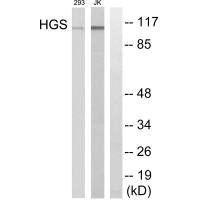
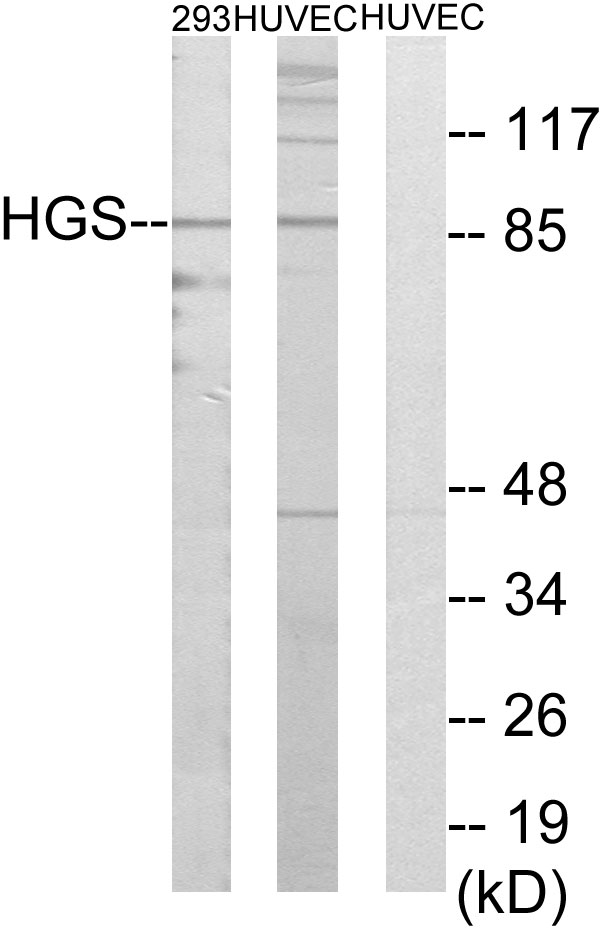
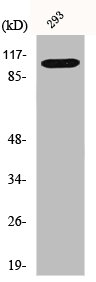
Western blot analysis of extracts from 293 cells and JK cells, using HGS antibody.
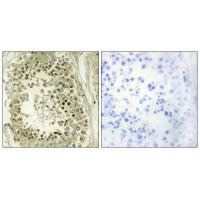
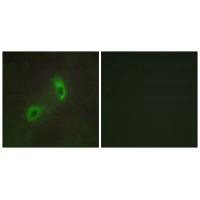
Western blot analysis of extracts from 293 cells and JK cells, using HGS antibody.
HGS Antibody
CSB-PA105291

ApplicationsImmunoFluorescence, Western Blot, ELISA, ImmunoHistoChemistry
Product group Antibodies
ReactivityHuman, Mouse, Rat
TargetHGS
Overview
- SupplierCusabio
- Product NameHGS Antibody
- Delivery Days Customer20
- ApplicationsImmunoFluorescence, Western Blot, ELISA, ImmunoHistoChemistry
- CertificationResearch Use Only
- ClonalityPolyclonal
- ConjugateUnconjugated
- Gene ID9146
- Target nameHGS
- Target descriptionhepatocyte growth factor-regulated tyrosine kinase substrate
- Target synonymsHRS, hepatocyte growth factor-regulated tyrosine kinase substrate, human growth factor-regulated tyrosine kinase substrate, protein pp110
- HostRabbit
- IsotypeIgG
- Protein IDO14964
- Protein NameHepatocyte growth factor-regulated tyrosine kinase substrate
- Scientific DescriptionInvolved in intracellular signal transduction mediated by cytokines and growth factors. When associated with STAM, it suppresses DNA signaling upon stimulation by IL-2 and GM-CSF. Could be a direct effector of PI3-kinase in vesicular pathway via early endosomes and may regulate trafficking to early and late endosomes by recruiting clathrin. May concentrate ubiquitinated receptors within clathrin-coated regions. Involved in down-regulation of receptor tyrosine kinase via multivesicular body (MVBs) when complexed with STAM (ESCRT-0 complex). The ESCRT-0 complex binds ubiquitin and acts as sorting machinery that recognizes ubiquitinated receptors and transfers them to further sequential lysosomal sorting/trafficking processes. May contribute to the efficient recruitment of SMADs to the activin receptor complex. Involved in receptor recycling via its association with the CART complex, a multiprotein complex required for efficient transferrin receptor recycling but not for EGFR degradation. Asao H., J. Biol. Chem. 272:32785-32791(1997). Lu L., Gene 213:125-132(1998). Scoles D.R., Hum. Mol. Genet. 9:1567-1574(2000).
- ReactivityHuman, Mouse, Rat
- Storage Instruction-20°C or -80°C
- UNSPSC41116161
Related products
Product group Antibodies

Anti-HGS Antibody144-01790
ApplicationsWestern Blot
ReactivityHuman, Mouse, Rat
TargetHGS
- SizePrice

Product group Antibodies

Anti-HGS Antibody Picoband(r)A01174-1-CARRIER-FREE
ApplicationsFlow Cytometry, ImmunoFluorescence, Western Blot, ELISA, ImmunoCytoChemistry, ImmunoHistoChemistry
ReactivityHuman, Mouse, Rat
TargetHGS
- SizePrice
Product group Antibodies
References

HGS antibody [C2C3], C-termGTX101718
ApplicationsImmunoFluorescence, Western Blot, ImmunoCytoChemistry, ImmunoHistoChemistry, ImmunoHistoChemistry Paraffin
ReactivityHuman, Mouse, Rat
TargetHGS
- SizePrice
Product group Antibodies

ApplicationsImmunoPrecipitation, Western Blot, ImmunoCytoChemistry, ImmunoHistoChemistry
TargetHGS
- SizePrice

Product group Antibodies

Anti-HGS AntibodyA95484
ApplicationsImmunoFluorescence, Western Blot, ELISA, ImmunoHistoChemistry
ReactivityHuman, Mouse, Rat
- SizePrice
Product group Antibodies

HRS AntibodyABX430007
ApplicationsWestern Blot, ELISA, ImmunoHistoChemistry
- SizePrice
Product group Antibodies
HGS AntibodyCSB-PA002970
ApplicationsImmunoFluorescence, Western Blot, ELISA, ImmunoHistoChemistry
ReactivityHuman, Mouse, Rat
TargetHGS
- SizePrice
Product group Antibodies

Goat anti-HRS / HGSEB07211
ApplicationsWestern Blot, ELISA, ImmunoHistoChemistry
ReactivityCanine, Human, Mouse, Rat
TargetHGS
- SizePrice
Product group Antibodies

HRS / HGS AntibodyLS-C408351
ApplicationsWestern Blot
ReactivityHuman, Mouse, Rat
TargetHGS
- SizePrice