

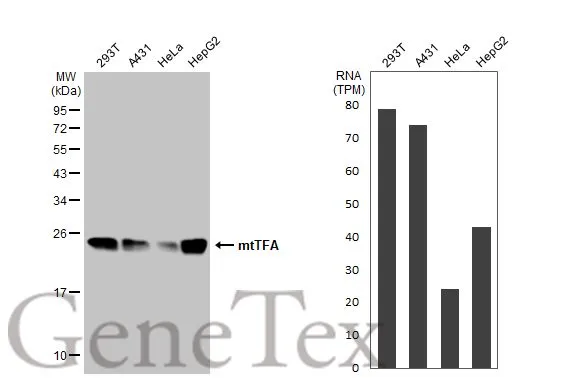
Various whole cell extracts (30 μg) were separated by 12% SDS-PAGE, and the membrane was blotted with mtTFA antibody (GTX103231) diluted at 1:5000. The HRP-conjugated anti-rabbit IgG antibody (GTX213110-01) was used to detect the primary antibody. Corresponding RNA expression data for the same cell lines are based on Human Protein Atlas program.
![mtTFA antibody detects mtTFA protein at mito by immunofluorescent analysis. Sample: HeLa cells were fixed in 4% paraformaldehyde at RT for 15 min. Green: mtTFA stained by mtTFA antibody (GTX103231) diluted at 1:500. Red: alpha Tubulin, a cytoskeleton marker, stained by alpha Tubulin antibody [GT114] (GTX628802) diluted at 1:1000. Blue: Fluoroshield with DAPI (GTX30920).](https://www.genetex.com/upload/website/prouct_img/normal/GTX103231/GTX103231_44440_20220121_ICC_IF_w_23060119_658.webp "mtTFA antibody detects mtTFA protein at mito by immunofluorescent analysis. Sample: HeLa cells were fixed in 4% paraformaldehyde at RT for 15 min. Green: mtTFA stained by mtTFA antibody (GTX103231) diluted at 1:500. Red: alpha Tubulin, a cytoskeleton marker, stained by alpha Tubulin antibody [GT114] (GTX628802) diluted at 1:1000. Blue: Fluoroshield with DAPI (GTX30920).")
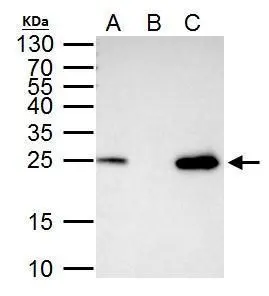
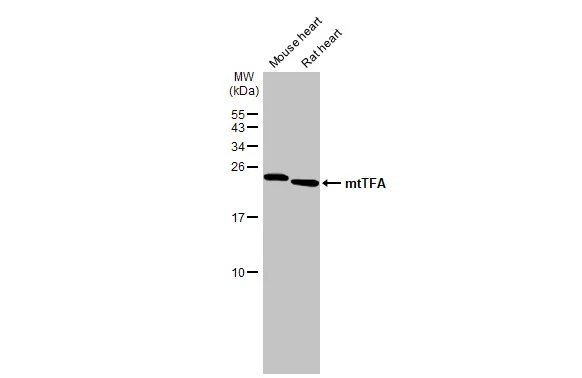
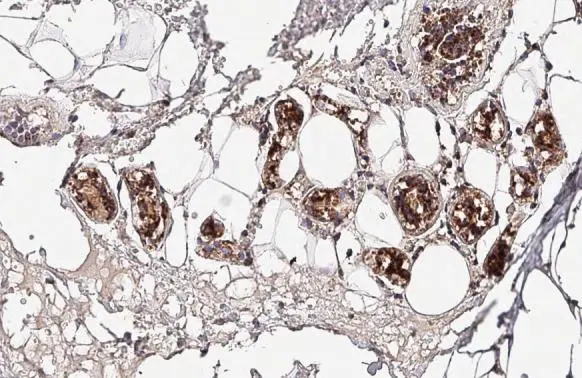
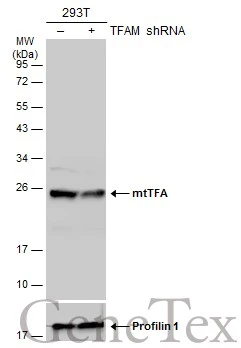
Various whole cell extracts (30 μg) were separated by 12% SDS-PAGE, and the membrane was blotted with mtTFA antibody (GTX103231) diluted at 1:5000. The HRP-conjugated anti-rabbit IgG antibody (GTX213110-01) was used to detect the primary antibody. Corresponding RNA expression data for the same cell lines are based on Human Protein Atlas program.
mtTFA antibody
GTX103231

ApplicationsImmunoFluorescence, ImmunoPrecipitation, Western Blot, ImmunoCytoChemistry, ImmunoHistoChemistry, ImmunoHistoChemistry Paraffin
Product group Antibodies
ReactivityHuman, Mouse, Rat
TargetTFAM
Overview
- SupplierGeneTex
- Product NamemtTFA antibody
- Delivery Days Customer9
- Application Supplier NoteWB: 1:500-1:3000. ICC/IF: 1:100-1:1000. IHC-P: 1:100-1:1000. IP: 1:100-1:500. *Optimal dilutions/concentrations should be determined by the researcher.Not tested in other applications.
- ApplicationsImmunoFluorescence, ImmunoPrecipitation, Western Blot, ImmunoCytoChemistry, ImmunoHistoChemistry, ImmunoHistoChemistry Paraffin
- CertificationResearch Use Only
- ClonalityPolyclonal
- Concentration1.23 mg/ml
- ConjugateUnconjugated
- Gene ID7019
- Target nameTFAM
- Target descriptiontranscription factor A, mitochondrial
- Target synonymsMTDPS15, MTTF1, MTTFA, TCF6, TCF6L1, TCF6L2, TCF6L3, transcription factor A, mitochondrial, mitochondrial transcription factor 1, mitochondrial transcription factor A, transcription factor 6, transcription factor 6-like 1, transcription factor 6-like 2 (mitochondrial transcription factor), transcription factor 6-like 3
- HostRabbit
- IsotypeIgG
- Protein IDQ00059
- Protein NameTranscription factor A, mitochondrial
- Scientific DescriptionThis gene encodes a mitochondrial transcription factor that is a key activator of mitochondrial transcription as well as a participant in mitochondrial genome replication. Studies in mice have demonstrated that this gene product is required to regulate the mitochondrial genome copy number and is essential for embryonic development. A mouse model for Kearns-Sayre syndrome was produced when expression of this gene was eliminated by targeted disruption in heart and muscle cells. [provided by RefSeq]
- ReactivityHuman, Mouse, Rat
- Storage Instruction-20°C or -80°C,2°C to 8°C
- UNSPSC41116161
Datasheet
Related products

Product group Antibodies

TFAM AntibodyCSB-PA023413LA01HU
ApplicationsWestern Blot, ELISA, ImmunoHistoChemistry
ReactivityHuman
TargetTFAM
- SizePrice
Product group Antibodies

Anti-TFAM Antibody144-60389
ApplicationsWestern Blot, ImmunoHistoChemistry
ReactivityHuman, Mouse, Rat
TargetTFAM
- SizePrice
Product group Antibodies

Anti-TFAM AntibodyA99849
ApplicationsImmunoFluorescence, ELISA, ImmunoHistoChemistry
ReactivityHuman
- SizePrice


Product group Antibodies

Anti-TFAM AntibodyHPA063684
ApplicationsWestern Blot, ImmunoCytoChemistry
ReactivityHuman
TargetTFAM
- SizePrice
Product group Antibodies

MtTFA / TFAM Antibody (Internal)LS-C368542
ApplicationsImmunoFluorescence, Western Blot, ImmunoCytoChemistry, ImmunoHistoChemistry, ImmunoHistoChemistry Paraffin
ReactivityHuman
TargetTFAM
- SizePrice

Product group Antibodies

Anti-mtTFA/TFAM Antibody Picoband(r)PB9447-CARRIER-FREE
ApplicationsImmunoFluorescence, ImmunoPrecipitation, Western Blot, ImmunoCytoChemistry, ImmunoHistoChemistry
ReactivityHuman, Mouse, Rat
TargetTFAM
- SizePrice
![mtTFA antibody [HL2012] detects mtTFA protein at mitochondria by immunohistochemical analysis. Sample: Paraffin-embedded human colon cancer. mtTFA stained by mtTFA antibody [HL2012] (GTX637913) diluted at 1:100. Antigen Retrieval: Citrate buffer, pH 6.0, 15 min](https://www.genetex.com/upload/website/prouct_img/normal/GTX637913/GTX637913_T-44872_20221230_IHC-P_23020621_881.webp)
Product group Antibodies
mtTFA antibody [HL2012]GTX637913
ApplicationsWestern Blot, ImmunoHistoChemistry, ImmunoHistoChemistry Paraffin
ReactivityHuman
TargetTFAM
- SizePrice
Product group Antibodies
mtTFA antibody, N-termGTX77852
ApplicationsWestern Blot
ReactivityHuman, Mouse
TargetTFAM
- SizePrice