

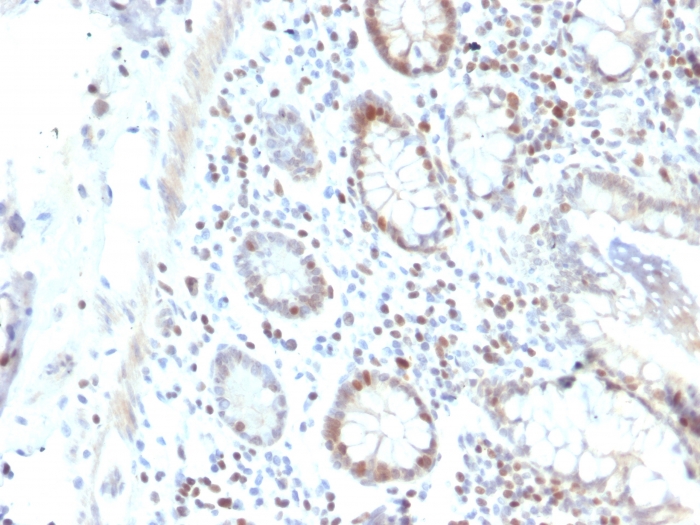
RAD51 (Prognostic and Response to Chemotherapy Marker)(RAD51/2702), Biotin conjugate, 0.1mg/mL [26628-22-8]
BNCB2702

ApplicationsFlow Cytometry, ImmunoHistoChemistry, ImmunoHistoChemistry Paraffin
Product group Antibodies
ReactivityBovine, Human, Mouse
TargetRAD51
Overview
- SupplierBiotium
- Product NameRAD51 (Prognostic and Response to Chemotherapy Marker)(RAD51/2702), Biotin conjugate, 0.1mg/mL [26628-22-8]
- Delivery Days Customer9
- ApplicationsFlow Cytometry, ImmunoHistoChemistry, ImmunoHistoChemistry Paraffin
- CAS Number26628-22-8
- CertificationResearch Use Only
- ClonalityMonoclonal
- Clone IDRAD51/2702
- Concentration0.1 mg/ml
- ConjugateBiotin
- Gene ID5888
- Target nameRAD51
- Target descriptionRAD51 recombinase
- Target synonymsBRCC5, FANCR, HRAD51, HsRad51, HsT16930, MRMV2, RAD51A, RECA, DNA repair protein RAD51 homolog 1, BRCA1/BRCA2-containing complex, subunit 5, RAD51 homolog A, RecA, E. coli, homolog of, RecA-like protein, recombination protein A
- HostMouse
- IsotypeIgG1
- Protein IDQ06609
- Protein NameDNA repair protein RAD51 homolog 1
- Scientific DescriptionRAD51 is one of the key factors of DNA repair by homologous recombination and has been shown to have anti-apoptotic activity in tumor cells. RAD51 protein interacts with a variety of tumor suppressor proteins including p53, BRCA1 and BRCA2. Elevated expression of RAD51 enhances radio-resistance of human tumor cells. Overexpression of RAD51 protein in tumor cells renders them resistant against cytotoxic drugs like Cisplatin. RAD51 interacts with BRCA1 and BRCA2 to influence subcellular localization and cellular response to DNA damage. BRCA2 inactivation may be a key event leading to genomic instability and tumorigenesis from deregulation of RAD51. High-level expression of RAD51 has been observed in a variety of human malignancies. RAD51 overexpression correlates with histological grading of the tumor in invasive ductal mammary carcinoma. Primary antibodies are available purified, or with a selection of fluorescent CF® Dyes and other labels. CF® Dyes offer exceptional brightness and photostability. Note: Conjugates of blue fluorescent dyes like CF®405S and CF®405M are not recommended for detecting low abundance targets, because blue dyes have lower fluorescence and can give higher non-specific background than other dye colors.
- SourceAnimal
- ReactivityBovine, Human, Mouse
- Storage Instruction2°C to 8°C,RT
- UNSPSC41116161
MSDS
Related products
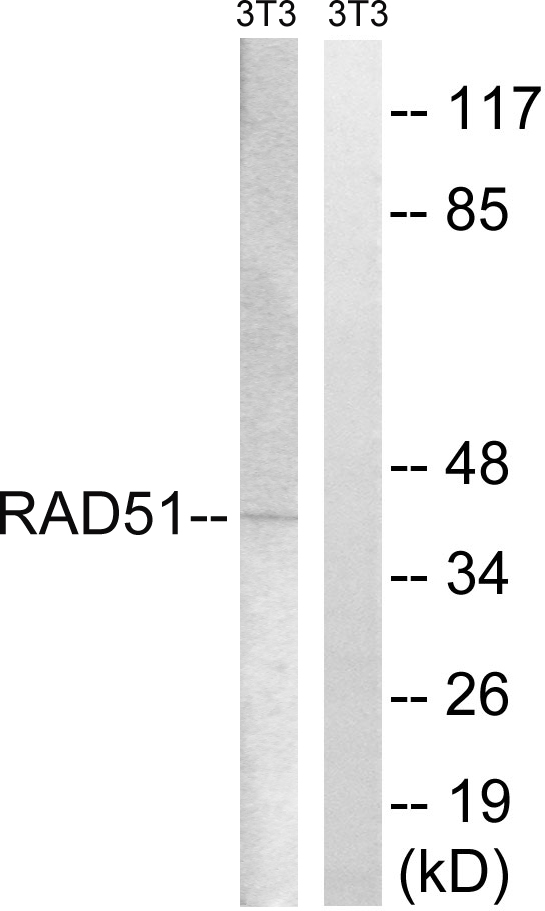
Product group Antibodies

Anti-RAD51 AntibodyA98997
ApplicationsWestern Blot, ELISA
ReactivityHuman, Mouse
- SizePrice
Product group Antibodies

Anti-RAD51 Antibody144-06268
ApplicationsImmunoFluorescence, Western Blot
ReactivityHuman, Mouse, Rat
TargetRAD51
- SizePrice
Product group Antibodies

Anti-Rad51 [3C10]AB01312-1.1-BT
ApplicationsImmunoFluorescence, ImmunoPrecipitation, Western Blot, ImmunoHistoChemistry
ReactivityBovine, Human, Porcine
TargetRAD51
- SizePrice

Product group Antibodies

Anti-Rad51 Antibody Picoband(r)A00088-CARRIER-FREE
ApplicationsFlow Cytometry, ImmunoFluorescence, Western Blot, ImmunoCytoChemistry, ImmunoHistoChemistry
ReactivityHuman, Mouse, Rat
TargetRAD51
- SizePrice
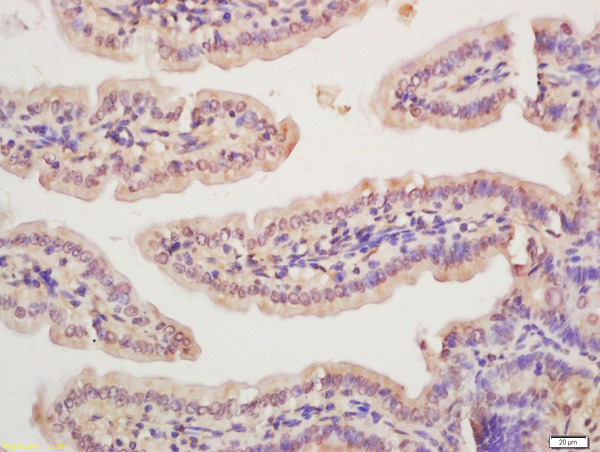
Product group Antibodies

Rad51 Polyclonal AntibodyBS-10145R
ApplicationsFlow Cytometry, ImmunoFluorescence, ImmunoCytoChemistry, ImmunoHistoChemistry, ImmunoHistoChemistry Frozen, ImmunoHistoChemistry Paraffin
ReactivityBovine, Canine, Equine, Human, Mouse, Porcine, Rabbit, Rat, Sheep
TargetRAD51
- SizePrice
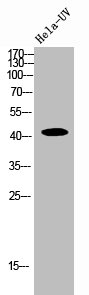
Product group Antibodies

RAD51 AntibodyCSB-PA003916
ApplicationsWestern Blot, ELISA, ImmunoHistoChemistry
ReactivityHuman, Mouse
TargetRAD51
- SizePrice
Product group Antibodies

RAD51 Polyclonal AntibodyCAC14547
ApplicationsImmunoFluorescence, ImmunoPrecipitation, Western Blot, ELISA, ImmunoHistoChemistry
ReactivityMouse
TargetRAD51
- SizePrice
![Various tissue extracts (30 μg) were separated by 10% SDS-PAGE, and the membrane was blotted with Rad51 antibody [N1C2] (GTX100469) diluted at 1:1000. The HRP-conjugated anti-rabbit IgG antibody (GTX213110-01) was used to detect the primary antibody, and the signal was developed with Trident ECL plus-Enhanced.](https://www.genetex.com/upload/website/prouct_img/normal/GTX100469/GTX100469_43467_20190201_WB_Z_w_23060100_710.webp)
Product group Antibodies

Rad51 antibody [N1C2]GTX100469
ApplicationsImmunoFluorescence, ImmunoPrecipitation, Western Blot, ImmunoCytoChemistry, ImmunoHistoChemistry, ImmunoHistoChemistry Paraffin
ReactivityHuman, Mouse, Rat, Zebra Fish
TargetRAD51
- SizePrice
Product group Antibodies

RAD51 / RECA AntibodyLS-C406716
ApplicationsWestern Blot, ELISA, ImmunoHistoChemistry
ReactivityHuman, Mouse
TargetRAD51
- SizePrice
Product group Antibodies

ApplicationsWestern Blot, ChIP Chromatin ImmunoPrecipitation, ELISA
ReactivityHuman
TargetRAD51
- SizePrice