

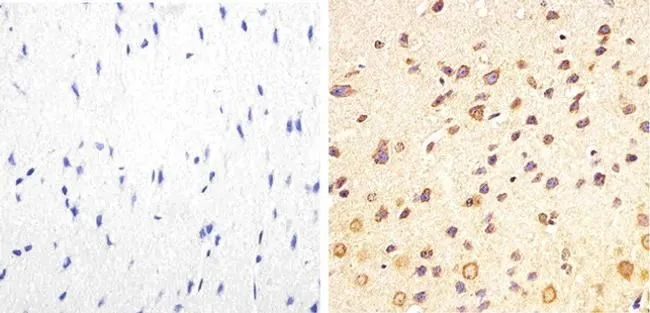
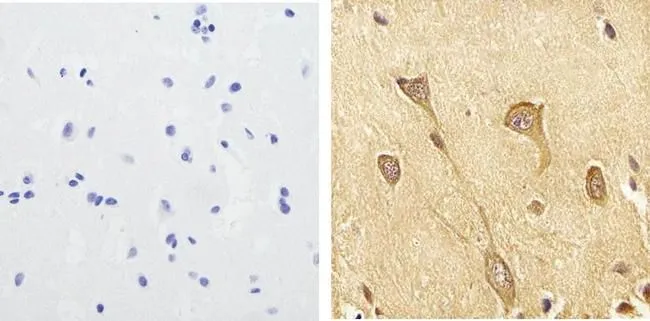
IHC-P analysis of mouse brain tissue using GTX24851 Tau (phospho Thr217) antibody. Right : Primary antibody Left : Negative control without primary antibody Antigen retrieval : 10mM sodium citrate (pH 6.0), microwaved for 8-15 min Dilution : 1:50
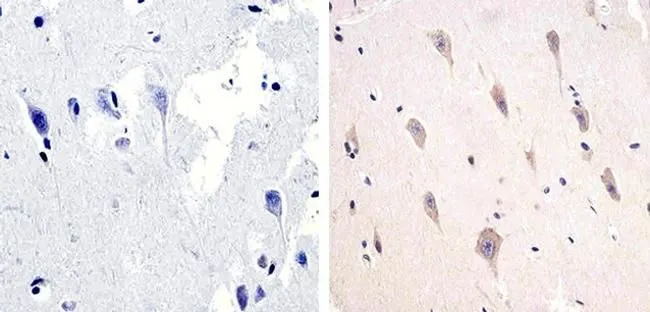
IHC-P analysis of mouse brain tissue using GTX24851 Tau (phospho Thr217) antibody. Right : Primary antibody Left : Negative control without primary antibody Antigen retrieval : 10mM sodium citrate (pH 6.0), microwaved for 8-15 min Dilution : 1:50
Tau (phospho Thr217) antibody
GTX24851

ApplicationsFlow Cytometry, Western Blot, ImmunoHistoChemistry, ImmunoHistoChemistry Paraffin
Product group Antibodies
ReactivityBovine, Canine, Human, Mouse, Primate, Rat, Sheep
TargetMAPT
Overview
- SupplierGeneTex
- Product NameTau (phospho Thr217) antibody
- Delivery Days Customer7
- Application Supplier NoteWB: 1:1000. IHC-P: 1:20-1:200. FCM: 1:20. *Optimal dilutions/concentrations should be determined by the researcher.Not tested in other applications.
- ApplicationsFlow Cytometry, Western Blot, ImmunoHistoChemistry, ImmunoHistoChemistry Paraffin
- CertificationResearch Use Only
- ClonalityPolyclonal
- ConjugateUnconjugated
- Gene ID4137
- Target nameMAPT
- Target descriptionmicrotubule associated protein tau
- Target synonymsDDPAC, FTD1, FTDP-17, MAPTL, MSTD, MTBT1, MTBT2, PPND, PPP1R103, TAU, Tau-PHF6, tau-40, microtubule-associated protein tau, G protein beta1/gamma2 subunit-interacting factor 1, PHF-tau, Tau-derived paired helical filament hexapeptide, neurofibrillary tangle protein, paired helical filament-tau, protein phosphatase 1, regulatory subunit 103
- HostRabbit
- IsotypeIgG
- Protein IDP10636
- Protein NameMicrotubule-associated protein tau
- Scientific DescriptionThis gene encodes the microtubule-associated protein tau (MAPT) whose transcript undergoes complex, regulated alternative splicing, giving rise to several mRNA species. MAPT transcripts are differentially expressed in the nervous system, depending on stage of neuronal maturation and neuron type. MAPT gene mutations have been associated with several neurodegenerative disorders such as Alzheimers disease, Picks disease, frontotemporal dementia, cortico-basal degeneration and progressive supranuclear palsy. [provided by RefSeq, Jul 2008]
- ReactivityBovine, Canine, Human, Mouse, Primate, Rat, Sheep
- Storage Instruction-20°C or -80°C,2°C to 8°C
- UNSPSC41116161
References
- Stem cell-derived neurons reflect features of protein networks, neuropathology, and cognitive outcome of their aged human donors. Lagomarsino VN et al., 2021 Nov 3, NeuronRead this paper
Datasheet
Related products

Product group Antibodies

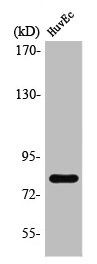
MAPT AntibodyCSB-PA004230
ApplicationsWestern Blot, ELISA
ReactivityHuman, Mouse, Rat
TargetMAPT
- SizePrice

Product group Antibodies

Anti-Tau/MAPT Antibody Picoband(r)A00097-3-CARRIER-FREE
ApplicationsImmunoFluorescence, Western Blot, ELISA, ImmunoCytoChemistry
ReactivityHuman, Mouse, Rat
TargetMAPT
- SizePrice
Product group Antibodies

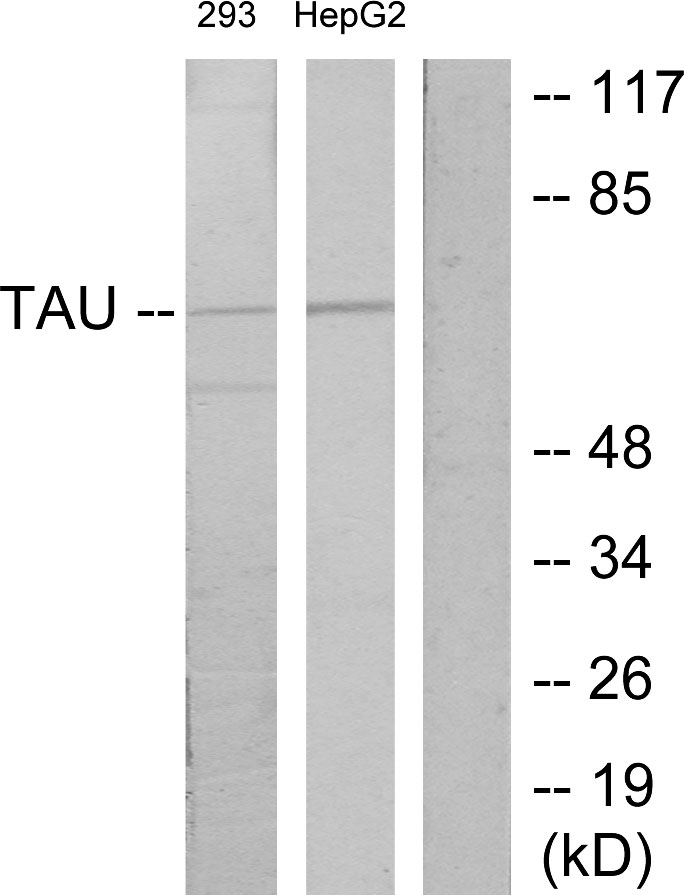
Anti-Tau AntibodyA101586
ApplicationsWestern Blot, ELISA
ReactivityHuman
- SizePrice
Product group Antibodies

Anti-Tau [PC1C6]Ab01120-2.0
ApplicationsWestern Blot, ImmunoHistoChemistry
ReactivityBovine, Human, Rat
TargetMAPT
- SizePrice


Product group Antibodies

Anti-MAPT AntibodyHPA069524
ApplicationsImmunoHistoChemistry
ReactivityHuman
TargetMAPT
- SizePrice
Product group Antibodies

ApplicationsImmunoPrecipitation, Western Blot, ELISA
ReactivityHuman
TargetMAPT
- SizePrice
Product group Antibodies
Tau (phospho Ser199) antibodyGTX24749
ApplicationsFunctional Assay, Flow Cytometry, ImmunoFluorescence, Western Blot, ImmunoCytoChemistry, ImmunoHistoChemistry, ImmunoHistoChemistry Paraffin
ReactivityCanine, Human, Mouse, Rat
TargetMAPT
- SizePrice
Product group Antibodies
Tau (phospho Ser214) antibodyGTX24846
ApplicationsFlow Cytometry, ImmunoFluorescence, ImmunoPrecipitation, Western Blot, ELISA, ImmunoCytoChemistry, ImmunoHistoChemistry, ImmunoHistoChemistry Paraffin
ReactivityCanine, Human, Mouse, Rat
TargetMAPT
- SizePrice