

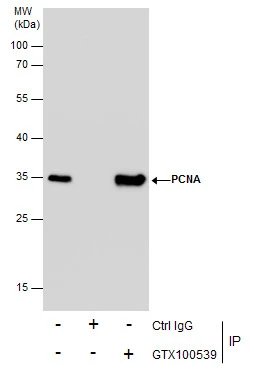
Immunoprecipitation of PCBP2 protein from HeLa whole cell extracts using 5 μg of PCBP2 antibody (GTX100539). Western blot analysis was performed using PCBP2 antibody (GTX100539). EasyBlot anti-Rabbit IgG (GTX221666-01) was used as a secondary reagent.
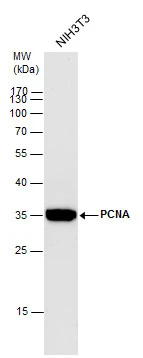
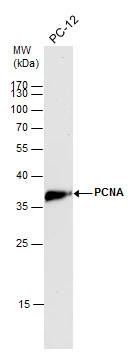
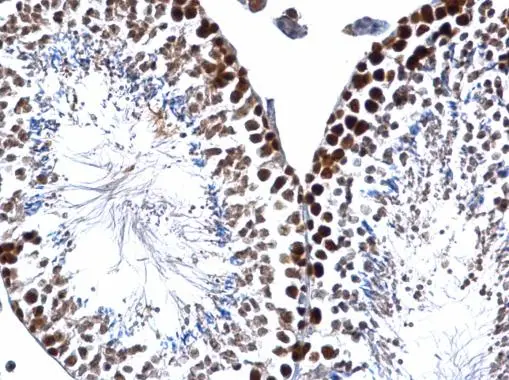
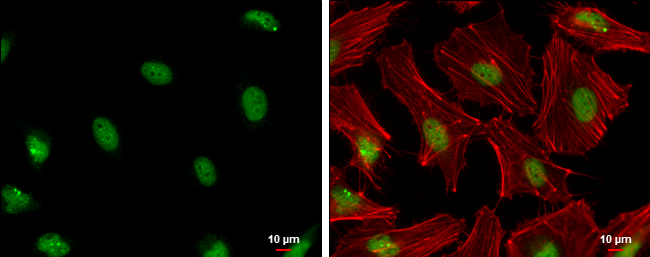
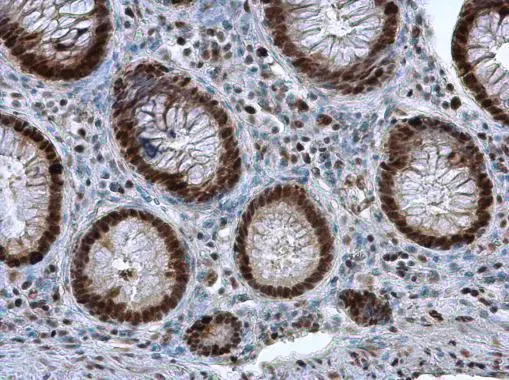
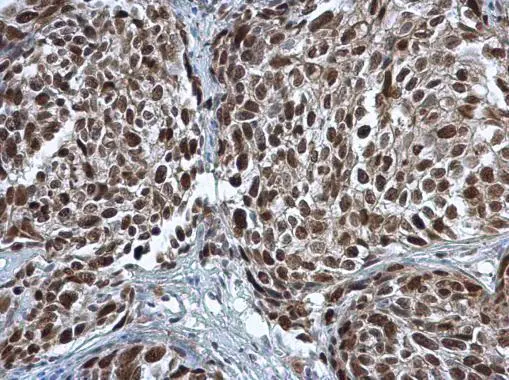
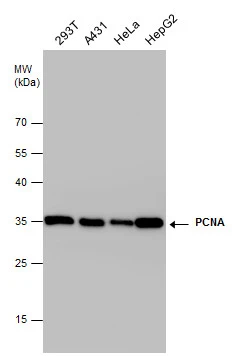
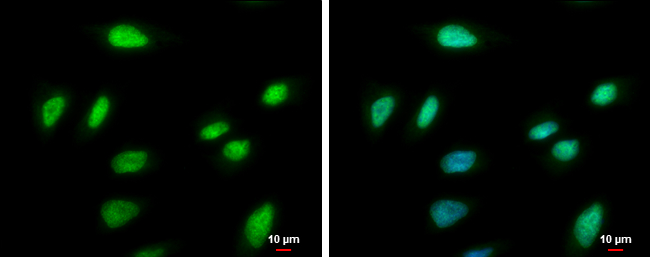
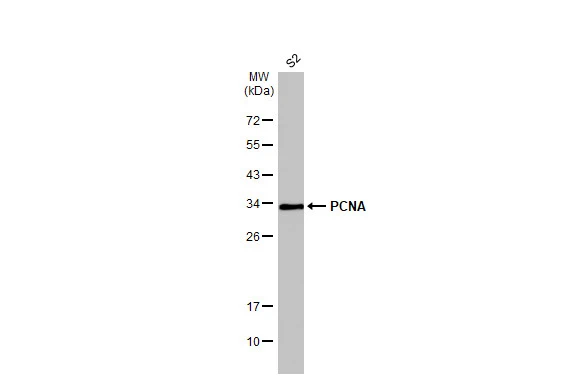
Immunoprecipitation of PCBP2 protein from HeLa whole cell extracts using 5 μg of PCBP2 antibody (GTX100539). Western blot analysis was performed using PCBP2 antibody (GTX100539). EasyBlot anti-Rabbit IgG (GTX221666-01) was used as a secondary reagent.
PCNA antibody
GTX100539

ApplicationsImmunoFluorescence, ImmunoPrecipitation, Western Blot, ImmunoCytoChemistry, ImmunoHistoChemistry, ImmunoHistoChemistry Paraffin
Product group Antibodies
ReactivityDrosophila, Hamster, Human, Mouse, Rat
TargetPCNA
Overview
- SupplierGeneTex
- Product NamePCNA antibody
- Delivery Days Customer9
- Application Supplier NoteWB: 1:500-1:3000. ICC/IF: 1:100-1:1000. IHC-P: 1:100-1:1000. IP: 1:100-1:500. *Optimal dilutions/concentrations should be determined by the researcher.Not tested in other applications.
- ApplicationsImmunoFluorescence, ImmunoPrecipitation, Western Blot, ImmunoCytoChemistry, ImmunoHistoChemistry, ImmunoHistoChemistry Paraffin
- CertificationResearch Use Only
- ClonalityPolyclonal
- Concentration0.11 mg/ml
- ConjugateUnconjugated
- Gene ID5111
- Target namePCNA
- Target descriptionproliferating cell nuclear antigen
- Target synonymsATLD2, proliferating cell nuclear antigen, DNA polymerase delta auxiliary protein, cyclin
- HostRabbit
- IsotypeIgG
- Protein IDP12004
- Protein NameProliferating cell nuclear antigen
- Scientific DescriptionThe protein encoded by this gene is found in the nucleus and is a cofactor of DNA polymerase delta. The encoded protein acts as a homotrimer and helps increase the processivity of leading strand synthesis during DNA replication. In response to DNA damage, this protein is ubiquitinated and is involved in the RAD6-dependent DNA repair pathway. Two transcript variants encoding the same protein have been found for this gene. Pseudogenes of this gene have been described on chromosome 4 and on the X chromosome. [provided by RefSeq]
- ReactivityDrosophila, Hamster, Human, Mouse, Rat
- Storage Instruction-20°C or -80°C,2°C to 8°C
- UNSPSC41116161
Datasheet
Related products
Product group Antibodies

Anti-PCNA AntibodyA83561
ApplicationsWestern Blot, ELISA, ImmunoHistoChemistry
ReactivityHuman, Mouse, Porcine, Rat
- SizePrice
Product group Antibodies

Anti-PCNA [SAIC-27C-101]AB00319-1.1-BT
ApplicationsMass Spectrometry
ReactivityHuman
TargetPCNA
- SizePrice

Product group Antibodies

Anti-PCNA Antibody130-10040
ApplicationsELISA
ReactivityHuman
TargetPCNA
- SizePrice

Product group Antibodies

Anti-PCNA Antibody Picoband(r)A00125-CARRIER-FREE
ApplicationsFlow Cytometry, ImmunoFluorescence, Western Blot, ELISA, ImmunoCytoChemistry, ImmunoHistoChemistry
ReactivityHuman, Mouse, Rat
TargetPCNA
- SizePrice
Product group Antibodies
References

PCNA Polyclonal AntibodyBS-0754R
ApplicationsFlow Cytometry, ImmunoFluorescence, Western Blot, ELISA, ImmunoCytoChemistry, ImmunoHistoChemistry, ImmunoHistoChemistry Frozen, ImmunoHistoChemistry Paraffin
ReactivityHuman, Mouse, Rat
TargetPCNA
- SizePrice
Product group Antibodies

PCNA Monoclonal AntibodyCSB-MA000186
ApplicationsWestern Blot, ELISA, ImmunoHistoChemistry
ReactivityHuman, Mouse, Rat
TargetPCNA
- SizePrice
Product group Antibodies

Goat anti-PCNA, BiotinylatedEB11650-B
ApplicationsWestern Blot, ELISA
ReactivityBovine, Canine, Human, Mouse, Porcine, Rat
TargetPCNA
- SizePrice
Product group Antibodies

Pcna Polyclonal AntibodyCAC07617
ApplicationsImmunoFluorescence, Western Blot, ELISA, ImmunoHistoChemistry
ReactivityMouse
TargetPCNA
- SizePrice
Product group Antibodies
References
PCNA antibody [PC10]GTX20029
ApplicationsFlow Cytometry, ImmunoFluorescence, ImmunoPrecipitation, Western Blot, ImmunoCytoChemistry, ImmunoHistoChemistry, ImmunoHistoChemistry Frozen, ImmunoHistoChemistry Paraffin
ReactivityFish, Human, Mouse, Rabbit, Rat
TargetPCNA
- SizePrice